
















Global stocks and U.S. Treasury bond prices rose as oil prices fell, boosting hopes that inflation could be curbed after the Federal Reserve raised interest rates and signaled further monetary tightening in the near future.
S&P 500 futures rose 0.8%, while Nasdaq 100 futures climbed 1%.
The pan-European STOXX 600 index also rose 0.7%, and the MSCI Asia Pacific index climbed 0.2%.
Brent crude is on track to record its first loss in two consecutive sessions for the first time this month, as the global benchmark crude price fell by more than 1.5% to near $104 a barrel.
Prices of US Treasury bonds rose across various maturities, with the yield on 10-year bonds falling five basis points to 4.98%.
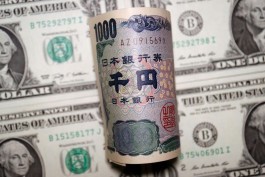
While the US dollar remained stable, gold rose 1.6% to $4,334, and Bitcoin climbed 0.5% to $76,457. The Japanese yen also strengthened, gaining 0.4% to 155.69 yen per dollar.
Markets assess next steps
Following the Federal Reserve's decision, the market is assessing what will happen next, as the interest rate hike and the pledge to curb inflation have helped to ease some of the pressure from rising prices. The decline in oil prices may further bolster hopes that the worst inflation fears will not materialize.
The so-called Federal Reserve Points Chart, which officials use to indicate their expectations for the base interest rate, suggests another increase in borrowing costs this year, while money markets are pricing in three interest rate hikes in total over the next twelve months.
Oil prices fell on Thursday amid signs that the Middle East supply disruption was easing. Axios reported that President Donald Trump is scheduled to meet with Gulf Arab leaders next week on the sidelines of the UN General Assembly in New York to discuss the next steps in the conflict.
Bloomberg quoted Joachim Clement, strategist at Panmure Liberum, as saying: “Current market expectations for further interest rate hikes in 2027 may be excessive.” He added: “We expect the next move in bond yields to be a likely pullback, which should in turn support equity markets.”
Warsh enhances the credibility of the Federal Reserve
Federal Reserve Chairman Kevin Warsh's determination to combat inflation reassured markets following the central bank's first interest rate hike since 2023.
Charu Chanana, chief investment strategist at Saxo Markets in Singapore, said: “I see this as more of a credibility relief deal than an ideal scenario,” according to Bloomberg.
She added: “Warsh has strengthened the Federal Reserve’s credibility in fighting inflation, and this can be seen in the strength of the dollar, while it is important that the long end of the Treasury yield curve has not moved upwards in an unorganized manner.”
She noted that markets still acknowledge some risks to growth from tighter monetary policy. But the relatively muted reaction at the long end of the yield curve, the resilience of technology stocks, and the more subdued tone in Asian markets suggest that investors are relieved that a more hawkish Federal Reserve has not translated into another shock to long-term yields.
Markets are assessing growth risks and the path of future tightening.
The Federal Open Market Committee voted unanimously to raise the benchmark interest rate by a quarter of a percentage point to a range between 3.75% and 4%.
Investors are now assessing how quickly the Federal Reserve might tighten policy further as inflationary pressures persist. Its projections point to another rate hike this year, putting upcoming economic data under intense scrutiny ahead of the October meeting. Attention now turns to monetary policy decisions in the UK on Thursday and Japan on Friday.
Gerald Gunn, chief investment officer at Reed Capital Partners, said: “Markets seem to be taking some comfort from the fact that the Federal Reserve is tightening policy in an economy that still has a relative degree of resilience, rather than one that is already showing significant signs of deterioration,” according to Bloomberg.
Warsh renews his message on inflation
Warsh reinforced the anti-inflation message he delivered in Jackson Hole last month. He told reporters on Wednesday that a very large number of goods and services categories are registering annual price increases exceeding 3% over six- and 12-month periods.
For his part, Trump asserted on social media after the decision that US interest rates should be at 1% or less, but he refrained from directly criticizing Warsh.
Wednesday's move could mark the start of a broader tightening cycle, with both policymakers and traders expecting at least one more rate hike this year. Attention now turns to the timing and pace of these additional steps.
Chris Zaccarelli, chief investment officer at Northlight Asset Management, said: “History is clear that once the Federal Reserve starts raising interest rates, it does so several times,” according to Bloomberg.
He added: But the pattern is less clear as to whether they will raise interest rates in successive meetings or leave them unchanged in some meetings.