








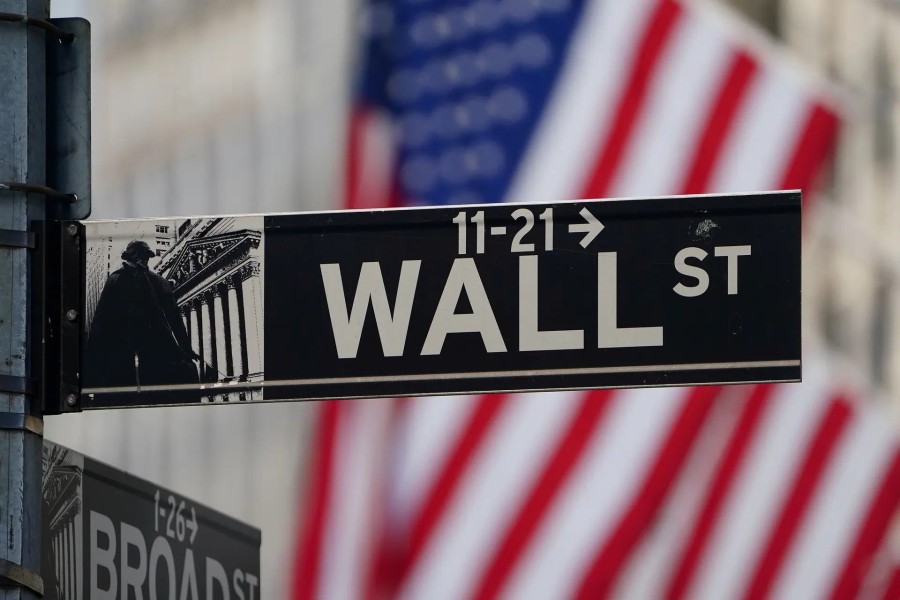


Futures contracts linked to major US stock indices are rising as traders assess the rationale behind the Federal Reserve's decision to raise interest rates for the first time in years. Fed Chair Kevin Warsh's comments are being interpreted as a signal of further rate hikes this year, though some analysts believe the central bank has simply reinforced market confidence in its commitment to combating high inflation. Meanwhile, Brent crude prices are falling as concerns about Middle East supply have eased slightly, while the Bank of England prepares to announce its interest rate decision.
1. Futures contracts rise
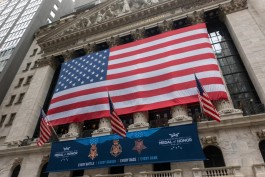
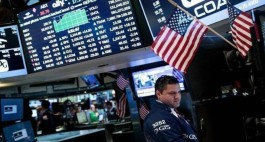
U.S. stock futures pointed to a rise on Thursday, as investors scrutinized the Federal Reserve's interest rate decision and comments from its chairman, Kevin Warsh.
By 9:59 a.m., Dow Jones futures had jumped 366 points, or 0.70%, S&P 500 futures had risen 52 points, or 0.70%, and Nasdaq 100 futures had increased 215 points, or 0.70%.
Major Wall Street averages fell in the previous session after the Federal Reserve opted to raise borrowing costs by a quarter of a percentage point, as expected, and new official interest rate projections pointed to another increase before the end of the year. Analysts at Vital Knowledge noted that Warsh's press conference following the decision was generally hawkish, suggesting that further rate hikes may be on the way (more details below).
In general, higher interest rates can weigh on stocks, although some analysts believe that the Fed's first rate hike since 2023 may boost confidence in the central bank's credibility and independence at a time when it is under pressure from President Donald Trump to lower interest rates.
Although higher interest rates are generally negative for the stock market, it may recover in the short term. This is because, following the move, investors may feel that the regulator knows what it's doing and therefore hope that the Fed's decisive actions will help curb inflation. However, this will put the Fed at odds with the US president again, as the latter supports lower interest rates, Arthur Azizov, CEO of B2BROKER Group, noted in a memo.
Following the monetary policy announcement, the yield on two-year US Treasury bonds reached its highest level since July 2024.
2. Warsh's hardline tendencies
Strategists paid particular attention to the Federal Reserve's statement defending its interest rate hike, noting that it abandoned the language it previously used to link high inflation to supply shocks caused by rising prices in certain sectors, including energy. Instead, the September statement simply described current price growth as high.
This change confirms that the committee is committed to the inflation target and will not look for excuses for not achieving it, said Bill Adams, chief U.S. economist at Fifth Third Commercial Bank.
Warsh later emphasized this point, stressing the need for the Fed to ensure that credit and financial conditions remain consistent with its mandate over time, and that relative price fluctuations in certain sectors of the economy do not become too wide. Adams noted that Warsh was likely implying that rising energy and electronics costs due to the ongoing war in the Middle East and the AI boom would not prevent the Fed from controlling inflation.
Adams added that while it is good for the Fed to issue such a statement given its mandate to control inflation, achieving this goal may prove difficult as diesel prices repeatedly hit new record highs.
3. Brent crude oil prices declined
In this context, Adams believes that the most significant known unknown that will affect monetary policy at the upcoming Federal Reserve meetings will be the energy price shock.
Much of the rise in energy costs is fueled by the escalating conflict in the Middle East, which has disrupted supply flows through two vital maritime points in the Gulf region.
The Strait of Hormuz remains effectively closed, as it has been since the start of the joint US-Israeli attack on Iran in late February. More recently, Houthi gains in western Yemen have given the Iranian-backed group greater leverage over the nearby Bab el-Mandeb Strait, the waterway connecting the Red Sea and the Gulf of Aden. These developments threaten key supply routes out of Saudi Arabia, a major oil producer. At the same time, Houthi attacks have disrupted a vital east-west pipeline across the kingdom.
However, some limited positive news has pierced the gloom. Riyadh hopes the pipeline will be back online within days, according to Bloomberg News. Separately, Libyan oil production has returned to normal levels after the closure of some fields.
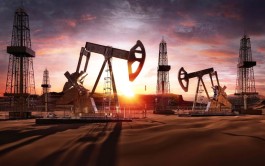
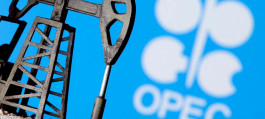
In this context, Brent crude futures fell on Thursday, but remained above the $100.00 per barrel level it surpassed earlier this month.
4. Bank of England meeting is just around the corner
Despite the Fed's decision, not all global central banks are expected to raise interest rates this week. The Bank of England, in particular, is likely to keep its main interest rate at 3.75% for the remainder of this year and until at least the middle of next year, according to a Reuters poll.
The economists surveyed widely felt that inflation in the United Kingdom was not strong enough to convince the Bank of England to raise interest rates.
However, with energy prices stubbornly rising amid the ongoing war in the Middle East, survey participants do not expect even the possibility of an interest rate cut to be discussed before late 2027.
Analysts at Deutsche Bank said they still view the monetary policy committee responsible for setting interest rates as relatively cautious compared to some other major central banks. The European Central Bank announced last week its second interest rate hike this year and raised its inflation forecasts, citing upward pressure on energy prices due to the war with Iran.
5. Holtec Nuclear suspends its planned IPO
Holtec Nuclear put its planned U.S. initial public offering on hold Thursday, citing market conditions, with the nuclear power technology firm announcing it will continue to evaluate the timing of the offering in the future.
The Camden, New Jersey-based group said it would continue to assess the timing of the offering in the future. The initial public offering was expected to be priced on Thursday.
Holtec had been seeking to raise up to $900 million by offering 50 million shares at a price between $15.00 and $18.00 per share. Bloomberg was the first to report the suspension of the offering.