






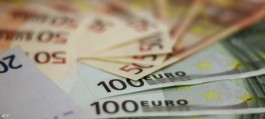
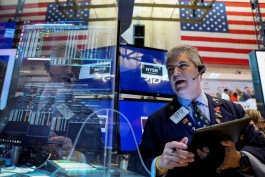



The U.S. dollar held near a three-month low on Thursday, after the U.S. Treasury moved to calm a sell-off in the bond market that had pushed long-term bond yields to their highest levels since 2007, boosting appetite for riskier assets and weakening the U.S. currency.
In trading, the dollar index, which measures the performance of the US currency against six major currencies, reached 98.723 points, its lowest level since May 14. The euro rose to $1.1692, approaching its highest level since mid-May.
Investors are struggling this week to counter a sharp sell-off in global bond markets, amid growing concerns about rising government debt and the potential for higher oil prices due to a lack of progress in ending the US-Israeli war on Iran.
The yield on the benchmark 30-year US Treasury note had surged to 5.337% earlier this week, its highest level in 19 years. In recent trading, the yield stood at 5.198%, having fallen 9 basis points following the Treasury Department's move, which effectively shifts a larger portion of government borrowing into shorter-term Treasury bills.
All eyes are on Yen
The broad weakness of the dollar provided some support for the Japanese yen, which moved away from the closely watched 160 yen-to-the-dollar level and traded at 158.41 yen-to-the-dollar, giving up some of its gains from the previous session.
The yen has been in the spotlight of the markets since the US and Japanese authorities intervened in a rare coordinated move at the end of July to halt its decline, after it had fallen to its lowest level in 40 years near 164 yen to the dollar.
The British pound rose to $1.3631, its highest level in three months, while the Swiss franc edged down slightly to 0.7986 francs per US dollar, after rising by about 2% in the previous session.
Minutes of the Federal Reserve meeting
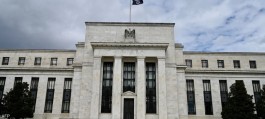
Concerns about inflation deepened during the US Federal Reserve meeting last month, as several officials were prepared to raise interest rates, while many others felt that raising borrowing costs would be necessary if inflation did not fall back to the US central bank's 2% target, according to the meeting minutes.
Analysts believe that the minutes of the Federal Reserve meeting in July confirmed that the interest rate-setting committee was more inclined to tighten than at the June meeting, but with inflation, labor market and economic activity data coming out weak since then, there is no indication that an interest rate hike is imminent.
UAE's Mubadala leads a $400 million financing round for German insurance company Wefox
Wefox, an insurance technology company founded by former emp.. Read more

Saudi Arabian Centers distributes dividends to shareholders for the second half of 2022 with a total of 356.25 million riyals
Arabian Centers Company has approved the distribution of cas.. Read more

The largest sovereign funds: "Abu Dhabi Investment Authority" advances to third place globally, with assets of $708.8 billion
The Abu Dhabi Investment Authority has advanced to the third.. Read more
Accumulated losses place Emirati companies on the "second category" screen, pending anonymity
Special Report - (Namazone): A group of companies listed.. Read more

Details 142 Saudi initiative to face the consequences of "Corona" B214 billion riyals
Special Report (Nmazzon): The government announced that.. Read more

Will gold remain a safe haven asset?
Gold has long been a source of controversy and contention am.. Read more
Global trade is expected to decline in the coming months
The economics department of Qatar National Bank (QNB) said t.. Read more

Analysis .. How will major central banks respond to the increasing cases of financial instability?
The global macroeconomic environment is experiencing some of.. Read more

The euro is below the dollar .. the lowest level in 20 years
For the first time in 20 years, the euro fell below $1 on Tu.. Read more

"OPEC"...The pressures of supply shortage will continue next year
OPEC expected global demand for oil to increase next year, b.. Read more
The dollar falls to its lowest level in three months.
NamaaZone " The Power of Knowledge"

Analysis Service |
Its a free service for technical consultation provided by NamaaZone to the website visitors. |
Open account Request |
NamaaZone provides a range of integrated trading solutions in local and global financial markets |