























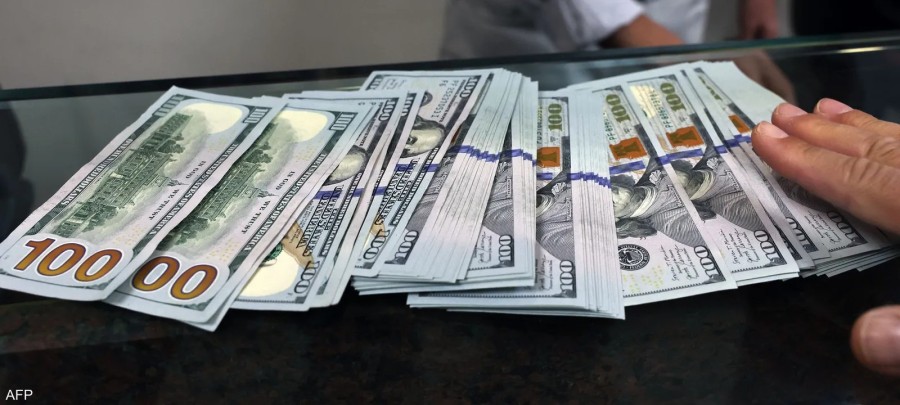
The US dollar retreated from its 18-month high against the euro on Wednesday, as investors awaited US inflation data and comments from Federal Reserve officials for fresh clues on the pace of monetary policy tightening.
The euro rose slightly after European Central Bank President Christine Lagarde dashed expectations of the bank intervening to support the battered French bond market, but gains in the European currency were limited by Brent crude prices rising to $106 a barrel.
Attention is now focused on US consumer price index data, along with speeches from Federal Reserve officials that may provide clearer indications of the path of interest rates.
Economists polled by Reuters expect the consumer price index to rise 0.6% month-on-month in September, after a 0.4% increase in August, while annual inflation is likely to accelerate to 3.6%, compared to 3.4% in the previous month.
The dollar index, which measures the performance of the US currency against a basket of major currencies, fell by 0.05% to 102.15 points, coinciding with a slight decline in US Treasury bond yields.
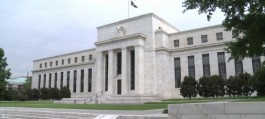
The dollar also fell on Tuesday, following comments interpreted as leaning toward monetary easing from the president of the Federal Reserve Bank of New York, John Williams, and Federal Reserve Governor Christopher Waller.
“I don’t think I have any reason at the moment to believe that we will need to take further action,” Williams said in an interview with Bloomberg News, referring to the possibility of raising interest rates again in 2027.
The CME Group’s FedWatch tool showed traders pricing in a 78% probability that the Federal Reserve will keep interest rates unchanged at its meeting on October 27-28, up from 53% a month earlier, while pricing in a cumulative monetary tightening of about 79 basis points by late 2027.
The US Federal Reserve raised its key interest rate by a quarter of a percentage point last month, to a range between 3.75% and 4.00%.
Federal Reserve officials Thomas Barkin and Michelle Bowman are scheduled to speak later on Wednesday, and the bank will also release its monthly report known as the Beige Book, which reviews economic conditions in the United States.
Euro under pressure amid concerns over French debt
A number of top global financial officials are meeting in the Thai capital, Bangkok, where the International Monetary Fund and the World Bank are holding their annual meetings.
French bonds were among the assets hardest hit by the recent global sell-off, as investors worried that political wrangling ahead of next year's presidential election could derail efforts to reduce the country's high fiscal deficit.
Speaking at a CNN event in Bangkok, Lagarde said that France must address its debt problems by getting its public finances in order, which reduced speculation about the European Central Bank potentially buying French bonds to control their rising yields.
The euro rose 0.06% to $1.1205, after hitting a 17-month low against the dollar earlier in the week, amid rising French borrowing costs and escalating inflation concerns stemming from higher energy prices.
In Britain, the Financial Times reported on Wednesday that British Finance Minister John Healey is expected to fund all the new measures included in this month's budget through tax increases or spending cuts, rather than resorting to further borrowing.
In contrast, a senior official at the International Monetary Fund said that the Fund does not recommend that Britain accelerate the pace of its fiscal consolidation.
The British pound rose 0.08% to $1.3265, while the Japanese yen edged up 0.03% to 158.395 yen against the dollar.

UAE's Mubadala leads a $400 million financing round for German insurance company Wefox
Wefox, an insurance technology company founded by former emp.. Read more

Saudi Arabian Centers distributes dividends to shareholders for the second half of 2022 with a total of 356.25 million riyals
Arabian Centers Company has approved the distribution of cas.. Read more

The largest sovereign funds: "Abu Dhabi Investment Authority" advances to third place globally, with assets of $708.8 billion
The Abu Dhabi Investment Authority has advanced to the third.. Read more
Accumulated losses place Emirati companies on the "second category" screen, pending anonymity
Special Report - (Namazone): A group of companies listed.. Read more

Details 142 Saudi initiative to face the consequences of "Corona" B214 billion riyals
Special Report (Nmazzon): The government announced that.. Read more

Will gold remain a safe haven asset?
Gold has long been a source of controversy and contention am.. Read more
Global trade is expected to decline in the coming months
The economics department of Qatar National Bank (QNB) said t.. Read more

Analysis .. How will major central banks respond to the increasing cases of financial instability?
The global macroeconomic environment is experiencing some of.. Read more

The euro is below the dollar .. the lowest level in 20 years
For the first time in 20 years, the euro fell below $1 on Tu.. Read more

"OPEC"...The pressures of supply shortage will continue next year
OPEC expected global demand for oil to increase next year, b.. Read more
The dollar is weakening as the world awaits US inflation data and comments from Federal Reserve officials.

NamaaZone " The Power of Knowledge"


Analysis Service |
Its a free service for technical consultation provided by NamaaZone to the website visitors. |
Open account Request |
NamaaZone provides a range of integrated trading solutions in local and global financial markets |