
















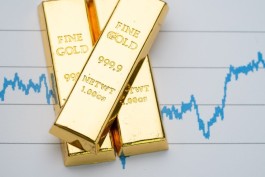







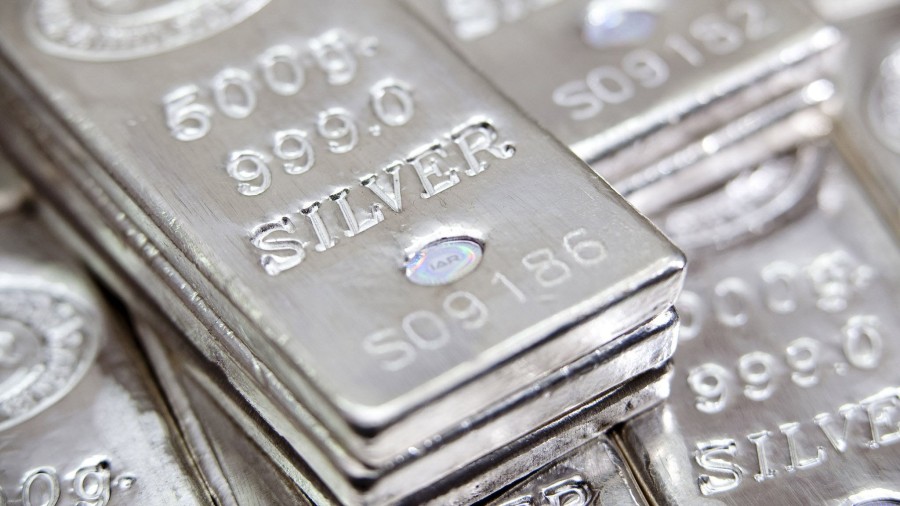


Silver has seen a remarkable surge this year, more than doubling in value, breaking a series of records, and outperforming gold. Since the beginning of the year, silver has gained 114.6%, with the spot price reaching approximately $62 per ounce after hitting a record high of $62.88 in today's session. Yesterday, silver also surpassed the $60 per ounce mark for the first time.
Silver futures also saw a significant surge, climbing 113% in 2025 and surpassing $61 for the first time this week. Several factors contributed to this rise, most notably limited supply, increased demand for safe-haven assets, and silver's extensive industrial role, which has allowed it to outperform gold this year.
There has been increasing talk recently about silver potentially reaching $100, driven by its expanding industrial uses and growing global demand. Paul Williams, CEO of Silveron Global, a company specializing in gold and silver, believes that silver's growing role in vital industrial sectors makes it more attractive, in addition to its role as a store of value during times of instability.
Williams points out that silver combines its nature as a basic industrial commodity with its status as a safe haven for investors, which is driving demand from both individual and institutional buyers. He emphasizes that those who find gold unattainable in terms of price are now seeing silver as an attractive alternative, especially given the ongoing upward trend in the precious metals market.
Williams adds that all the factors supporting silver's rise remain in place, but he also warns of potential price volatility. Silver plays a pivotal role in many modern industries, as it is used in the manufacture of electrical switches, solar panels, and mobile phones.
Silver is also a key component of the technological infrastructure driving the rise of artificial intelligence, thanks to its high electrical and thermal conductivity. A report by the Silver Institute indicates that global industrial demand for silver will continue to rise over the next five years, fueled by the expansion of the solar energy, electric vehicle, data center, and AI sectors.
Silver is expected to reach $100.
Williams predicted last October that silver would surpass $100 by late 2026, when it was nearing $50. He now asserts that the current price action, which has pushed silver above $60, reinforces this trajectory.
He says the supply-demand imbalance continues to support prices, and that the fundamentals of the silver market are strengthening. He believes any potential pullback would be merely a temporary pause, not a reversal, especially given the tight market and persistently high demand.
He asserts that the outlook for silver in 2026 is bright, particularly given the growth of industries that rely on it. Philippe Gesells, head of strategy at BNP Paribas Fortis, concurs with this optimistic forecast, arguing that weak valuations, years of persistent deficits, and the global industrial transformation have created ideal conditions for silver to rise so significantly.
Silver outperforms gold despite gold's strong performance
Gissels points out that the story of silver's rise in 2025 was summarized by the convergence of scarcity and industrial transformation, which led to what he calls market magic. He expects silver to continue its upward trend next year, despite the possibility of sharp fluctuations due to profit-taking, before reaching the $100 per ounce level.
Giesels had previously explained that silver, which had stagnated for decades around $50, had finally entered an extended upward phase that could push prices into the triple digits during 2026. He believes that the market is witnessing the beginning of a long-term upward trend, not its end.
Although gold has also hit record highs and risen by about 60% since the beginning of the year, silver continues to outperform. The gold-to-silver ratio has fallen from its April peak to around 68, its lowest level since 2021. Russ Mould, investment director at AG Bell, notes that silver appears relatively cheap compared to gold, despite the narrowing gap between the two.
Trading and investment options for silver
Mould explains that investors wishing to enter the silver market are not required to purchase bullion or coins, which incur high storage and insurance costs. Instead, investors can purchase exchange-traded instruments (ETIs) that track silver's performance and provide it to them after deducting operating costs.
It also points to the possibility of investing in the shares of silver mining companies, as their profits and cash flows can rise at a faster pace than the spot price of silver due to higher fixed costs, while noting that they may also decline at a faster pace if prices fall.
London is home to strong mining companies such as Fresnillo and Hochschild, but Mould emphasizes the importance of studying a company's financial strength and assessing risks related to geology, weather, and political unrest before investing.
Mould also points out the existence of investment funds that track the shares of silver mining companies globally, such as the Global X Silver Miners Fund and the iShares MSCI Global Silver and Metals Miners Fund, which provide investors with broad exposure to the mining sector in various markets.