




































Oil prices were largely stable during trading on Thursday, as investors assessed the implications of the latest US strikes on Iran, amid concerns that the recent military developments could derail efforts to end the war between the two countries and delay the full reopening of the Strait of Hormuz to shipping.
Brent crude futures rose 6 cents, or 0.1%, to $78.08 a barrel by 10:10 a.m. Riyadh time.
U.S. West Texas Intermediate crude futures also rose by 13 cents, or 0.2%, to $73.65 a barrel.
Both crude oils had gained more than a dollar after the close of Wednesday's session, following the start of a new wave of US military strikes inside Iran.
Trump's threats and military strikes are supporting prices
Before the strikes were carried out, Brent and West Texas Intermediate crude had ended Wednesday's trading at their highest levels in more than two weeks, after US President Donald Trump threatened to launch new attacks on Iran.
Prior to the renewed military escalation, oil prices were moving in a downward direction, as markets tried to absorb the increased supplies coming from the Middle East following the temporary truce, along with signs of rising oil inventories.
Linh Tran, a market analyst at XS.com, said that West Texas Intermediate crude is poised to continue its sharp movements in the short term, explaining that continued or escalating tensions between the United States and Iran could push oil prices up to $80 a barrel.
She added that if risks in the Middle East subside, markets are likely to refocus on fundamental factors, such as rising US inventories, increased domestic production, and plans by major producers to raise production levels.
US inventories are rising, but markets are ignoring it.
The U.S. Energy Information Administration announced Wednesday that U.S. crude oil inventories rose last week for the first time since mid-April, amid declining U.S. exports.
Although rising inventories are usually a factor that puts downward pressure on oil prices, its impact was limited, as geopolitical developments overshadowed investors' concerns.
The US military announced that it had completed military strikes inside Iran aimed at ensuring continued navigation through the Strait of Hormuz, hours after US President Donald Trump declared the end of the interim agreement to end the war.
Washington targets 90 sites, and Iran retaliates.
The US Central Command explained that US forces targeted approximately 90 military targets inside Iran, including air defense systems, coastal surveillance facilities, missile and drone storage sites, as well as naval capabilities and military logistics infrastructure extending along the Iranian coast.
In response, Iran announced on Wednesday that it had launched attacks on US military sites in Bahrain and Kuwait, in retaliation for previous US strikes targeting Iranian infrastructure.
This mutual escalation reflects the continued fragility of the security situation in the region, despite diplomatic efforts to contain the crisis.
The Strait of Hormuz remains a focus of market attention.
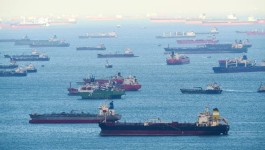
Before the outbreak of war, about 20% of the world's oil and liquefied natural gas supplies passed through the Strait of Hormuz, which is one of the most important strategic corridors for energy trade in the world.
Iran’s control of this strait is one of the most important bargaining chips it possesses during the conflict, which began after the US and Israeli air strikes against Iran on February 28.
Suvro Sarkar, head of energy research at DBS Bank, said that geopolitical risks remain high despite the interim peace agreement between Washington and Tehran, predicting that uncertainty will continue to support oil prices in the near term.
He added that Iran has strong incentives to prolong the negotiations, which means that the war risk premium could remain part of oil prices for several months, keeping markets vulnerable to fluctuations, even if prices gradually decline in the medium term.