



































Oil prices continued their decline during Tuesday's trading, as markets continued to assess the prospects for resuming oil flows through the Strait of Hormuz, amid continued uncertainty over the details of the initial agreement announced to end the war with Iran, along with increasing indications of weak actual demand in global markets.
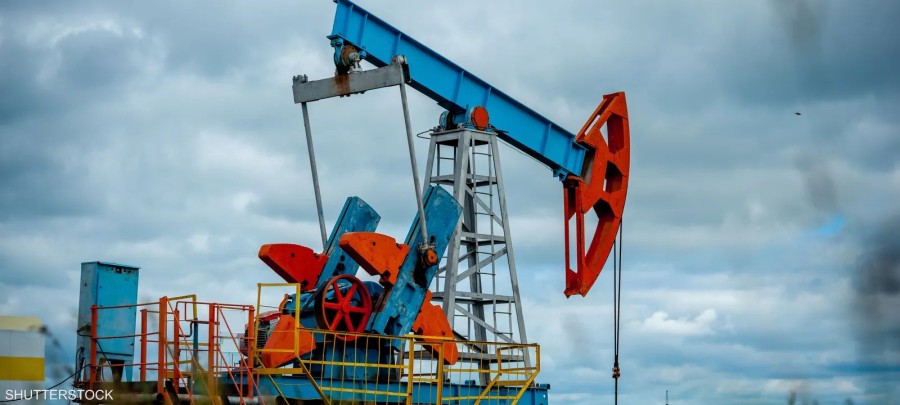
Brent crude futures fell 45 cents, or 0.5%, to $82.72 a barrel.
U.S. West Texas Intermediate crude also fell by 24 cents, or 0.3%, to $80.51 a barrel.
These declines came after sharp losses suffered by oil in Monday's session, with prices falling by about 5% to their lowest close since March 4.
US President Donald Trump had announced that a memorandum of understanding had been signed to end the US-Israeli war with Iran, but the full details of the agreement have not yet been published, keeping the markets cautious.
Bets on the return of supplies through the Strait of Hormuz
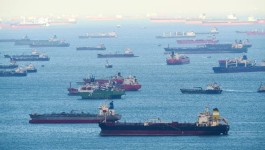
The military conflict led to the closure of the Strait of Hormuz, through which about one-fifth of the world's oil supply passed before the outbreak of the war.
With the announcement of the initial agreement, markets began to anticipate a gradual return of oil flows through this vital corridor, which contributed to the downward pressure on prices in recent days.
A number of analysts believe that the resumption of supply flows may begin in the coming period, although a full return to pre-war levels will take longer.
Analysts at Morgan Stanley noted in a research note that restoring oil tanker traffic through the strait could take several weeks.
The bank expects about 50% of lost production to return by next September, with the percentage rising to 80% by December, a slightly faster rate than previous estimates.
Weak global demand is putting pressure on the market.
In addition to geopolitical factors, oil prices are facing additional pressure from signs of weakness in global demand for crude.
Morgan Stanley analysts explained that a wide range of indicators had shown weakness in the physical oil markets over the past few weeks.
They pointed out that rising US oil exports and declining Chinese imports are the most influential factors at the moment.
They added that these trends do not appear likely to change in the next few weeks, which may keep pressure on prices.
In this context, China's crude oil imports fell by 29% last May, reaching their lowest level in 8 years.
Forecasts also indicate that China's purchases of Saudi oil are likely to decline in July, reflecting the continued slowdown in demand among the world's largest oil importer.
The details of the agreement are still incomplete.
Initial indications suggest that an agreement between the United States and Iran could lead to the reopening of the Strait of Hormuz and the end of the naval blockade imposed on it.
The agreement also includes a 60-day extension of the ceasefire, giving negotiators additional time to address the more complex issues, most notably Iran’s nuclear program.
Iranian President Masoud Pezeshkian described the agreement as an important step towards ending the fighting and halting the military escalation.
But he stressed at the same time that reaching a final agreement that would guarantee a permanent truce has not yet fully materialized.
These statements remain an important factor in explaining why oil prices have not collapsed further, as markets are still cautious about the possibility of negotiations faltering or the implementation of the agreement's terms being delayed.
The crucial phase has not yet begun.
Analysts believe that the first phase of the agreement was the easiest, as it focused on signing a political agreement and extending the ceasefire.
Sufroo Sarkar, head of energy research at DBS Bank, said that the signing of the anticipated agreement in Geneva and the extension of the truce for 60 days provide an opportunity to buy time and postpone the more sensitive issues.
He explained that the second phase is what the markets will focus on more, because it relates to the gradual reopening of the Strait of Hormuz and the end of the US naval blockade imposed on Iranian ports and ships.
He added that any reopening process that is not done clearly and simultaneously could lead to a return of sharp fluctuations in oil prices.
He noted that the mutual distrust between the two sides makes investors more cautious in assessing the chances of the agreement's success in the coming weeks.
The nuclear issue remains the biggest source of concern.
In a development that could help calm concerns, a senior Iranian official said on Monday that Tehran would freeze its nuclear activities until a final agreement is reached.
He added that Iran would stop enriching more uranium and would also refrain from expanding its nuclear facilities during the negotiation period.
Despite the importance of this step, the markets realize that the nuclear issue remains the most complex and sensitive issue in the negotiations between the two sides.
Therefore, the trajectory of oil prices in the coming period remains dependent on the speed of implementation of the agreement's provisions, the progress achieved in the nuclear negotiations, and the pace of the return of supplies through the Strait of Hormuz, which represents one of the most important energy arteries in the world.