



























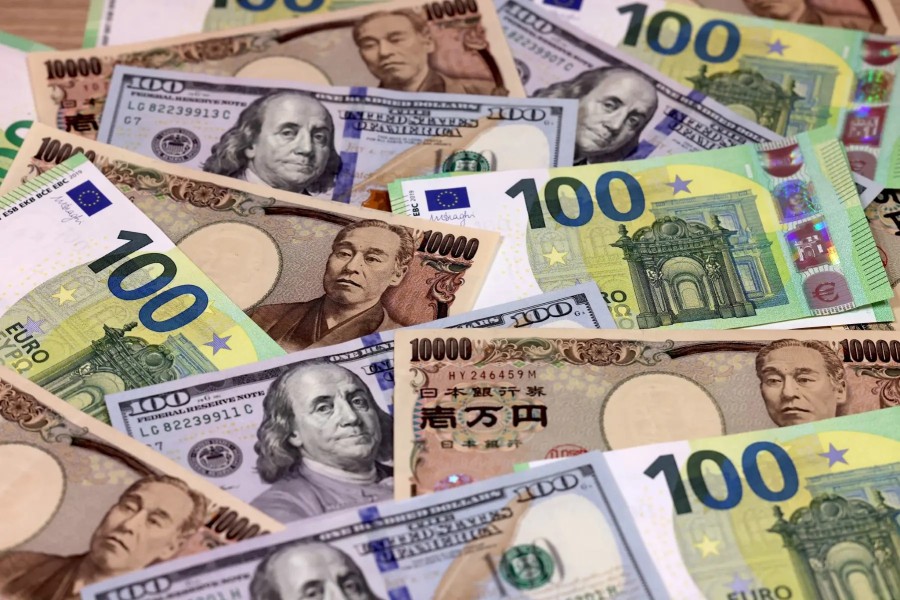


The euro was largely steady on Thursday as investors braced for what is expected to be the European Central Bank's first interest rate hike since 2023, while continuing to assess the implications of renewed US military strikes on Iran.
The EUR/USD pair edged down slightly against the dollar, remaining near its lowest levels since late March. Meanwhile, the US Dollar Index hovered near the 100 mark as of 9:30 AM Saudi time, holding close to its highest level in two months.
An interest rate hike by the European Central Bank is almost certain.
The European Central Bank is widely expected to raise its deposit rate by 25 basis points to 2.25% when policymakers announce their decision at 3:15 PM Saudi time. If this occurs, it will be the first rate hike since September 2023, underscoring the bank's commitment to curbing inflation despite a slowing economic slowdown.
While higher interest rates typically support the euro by narrowing the yield gap with the dollar, escalating tensions between the United States and Iran have complicated the picture.
Rising energy prices are fueling concerns about slowing growth and persistent inflation in the eurozone, leading investors to question the extent to which interest rate hikes can support the currency. Traders appear to be increasingly focused on the broader economic risks associated with a protracted conflict, rather than the immediate gains from higher yields.
Analysts at Bank of America Group indicated that shifts in the Federal Reserve's policy outlook, coupled with the European Central Bank's tightening, may ultimately provide limited support for the euro. Many market participants believe that a quarter-point rate hike is fully priced in at current rates, thus narrowing the potential for further gains.
Exchanges of fire between the United States and Iran; and rising oil prices
Risk appetite remained subdued following additional US strikes on Iranian targets overnight. President Donald Trump warned that further military action could follow if Tehran fails to reach an agreement with Washington.
Iran announced it had launched counterattacks against US military targets at air bases in Kuwait and Bahrain. Tehran also announced it had halted shipping through the Strait of Hormuz, one of the world's most important energy shipping lanes.
This escalation has pushed up oil prices and kept traders on edge in the currency markets.
The US consumer price index accelerated in May, while the core measure declined.
Data released on Wednesday revealed that U.S. consumer prices accelerated in May, reinforcing expectations that the Federal Reserve may keep interest rates high for longer.
Market participants expect at least one interest rate hike from the Federal Reserve before the end of the year.
Investors are now awaiting US producer price data and weekly jobless claims later in the day, looking for further clues about the path of inflation and the expected direction of Federal Reserve policy.
Bank of Japan meeting looms amid risks of intervention in the yen market
The USD/JPY pair settled at 160.53 yen, maintaining its position above the 160 yen level, which prompted intervention by Japanese authorities in April.
Investors are awaiting the Bank of Japan's monetary policy meeting next week, with the market widely expecting policymakers to raise interest rates to 1.0%, given that inflation remains above the central bank's target.