


































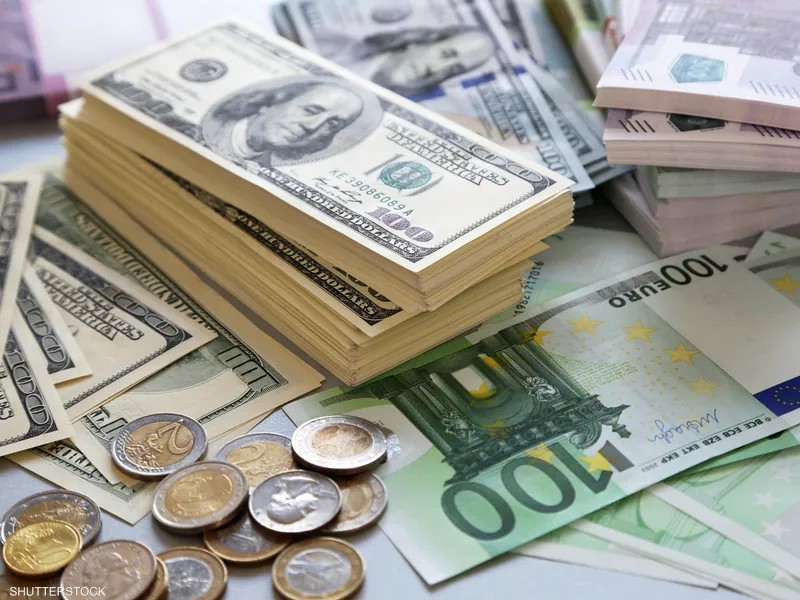


The euro fell in the European market on Wednesday against a basket of global currencies, deepening its losses for the third consecutive day against the US dollar and hitting its lowest level in a year, as investors remain focused on buying the US currency as the best available investment and alternative in the foreign exchange market.
Amid falling global oil prices, inflationary pressures on monetary policymakers at the European Central Bank are easing, reducing the likelihood that the bank will raise European interest rates again this year.
Price overview
Euro exchange rate today: The euro fell against the dollar by about 0.2% to ($1.1361), the lowest level since June 2025, from today’s opening price of ($1.1381), and recorded a high of ($1.1384).
The euro ended Tuesday's trading down 0.4% against the dollar, its second consecutive daily loss, due to strong economic data released in the United States.
US dollar
The dollar index rose more than 0.1% on Wednesday, extending its gains for the third consecutive session and hitting a 13-month high of 101.51 points, reflecting the continued rise in the levels of the US currency against a basket of global currencies.
This rise is due to purchases of the US dollar as the best available investment, in light of the succession of strong economic data in the United States, which support the Federal Reserve's direction towards raising interest rates, and as the best alternative investment due to the intense sell-off in global technology stocks.
global oil prices
Global oil prices fell nearly 1% on Wednesday, deepening their losses for the third consecutive day and hitting their lowest level in three months, amid expectations of smoother crude flows through the Strait of Hormuz.
There is no doubt that the decline in global oil prices reduces fears of accelerating inflation, which supports the hypothesis that the European Central Bank will keep its monetary policy tools unchanged for a long time this year.
European interest rate
Reports: The European Central Bank is considering suspending the normalization of monetary policy in July if energy prices stabilize at their current levels.
The money market's pricing of the likelihood of the European Central Bank raising European interest rates by about 25 basis points next July is stable around 30%.
In order to reprice the above probabilities, investors are awaiting further economic data from the Eurozone on inflation, unemployment and wage levels.