









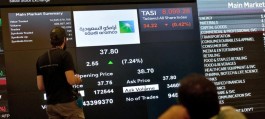












The Caracas stock exchange in Venezuela jumped by about 50% during the session on January 6, just days after the United States carried out a covert operation that ousted Venezuelan President Nicolas Maduro.
The Venezuelan stock market has risen 74% since President Maduro's arrest, a move that reversed a sharp wave of optimism among investors.
Since December 23, as pressure mounted from US President Donald Trump on the Maduro government, Venezuela’s stock market jumped 148%, in one of the strongest price movements in the market’s history.
With Venezuela’s Caracas Stock Exchange index surging 50% in a single session and rising 148% since December, analyzing this sudden surge of optimism in such a small and illiquid market becomes crucial. Subscribe now to InvestingPro to access WarrenAI, a tool for assessing the impact of rapid political developments on high-risk emerging markets and understanding the implications of sanctions relief. Take advantage of New Year’s discounts of up to 55% and enjoy the platform now available in Arabic.
Caracas index rises, fueled by optimism
The main IBC index on the Caracas Stock Exchange rose from 2,231 points on January 2 to 3,897 points by January 6, an increase of 74.68%, driven by investor optimism about the possibility of easing sanctions and a return to economic activity.
However, it should be noted that the majority of shares in the Caracas Stock Exchange are owned by local banks, financial institutions, and wealthy local investors, rather than a broad base of individual investors, in addition to very low levels of liquidity.
According to observers, the reasons for this rise are due to expectations of lifting sanctions on Venezuela, the possibility of global investments flowing into the country, expectations of achieving economic growth under American supervision, as well as hopes for a return to political stability.
Exaggerated movement and warnings about reality
The magnitude of this sharp rise suggests that investors are interpreting recent developments as a potential positive shift in Venezuela’s political and economic landscape.
The Caracas Stock Exchange was founded in 1947, but actual trading is practically limited to only about 15 companies, making it the smallest stock exchange in South America, as daily trading volumes did not exceed $1 million last year.
CV Advisors CEO Elliott Dornbusch described the sudden surge in investment in Venezuela following Maduro's ouster as irrational, asserting that real opportunities will not emerge until democracy and the rule of law are restored.
Investor skepticism and anticipated disappointment
Dornbusch explained that everyone is now contacting their financial advisors or wealth management offices looking for investment opportunities in Venezuela, asking how to take advantage of the new situation, considering this behavior to be unrealistic.
Dornbusch added that the US government's overthrow of Maduro and its pledge to work with the remaining pillars of the Venezuelan regime, while encouraging investment in the oil sector, will not succeed in achieving the desired prosperity for the country.
In a letter to his investors, he stressed that any genuine economic recovery must be preceded by a clear political transition, emphasizing that political transformation is the essential condition for any sustainable stability.
Venezuelan bonds and oil are at the heart of the matter.
Venezuelan sovereign bonds and bonds of state oil company PDVSA have seen strong gains, fueled by hopes of regime change and debt restructuring following Maduro's arrest.
Prices for Venezuela's troubled bonds and those of the state-owned oil company have more than doubled in recent months, trading between 23 and 33 cents on the dollar, as Trump intensifies pressure on Maduro. While debt restructuring remains a distant prospect, investors believe that if it were to materialize, it could propel the recovery to the 50-60 cent range on the dollar.
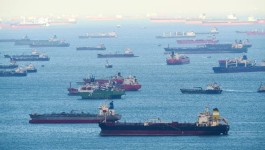
Trump said Venezuela would deliver up to 50 million barrels of oil to the United States, worth approximately $2.8 billion at current prices, with the shipments to be sold and the proceeds distributed to benefit both countries.
A blow to China and volatility in the oil market
Trump’s announcement came late Tuesday without sufficient details, but it represented a major step in the United States’ quest to expand its economic influence inside and outside Venezuela following Maduro’s capture, and it also dealt a direct blow to China, which had been Venezuela’s biggest buyer of oil and a close partner of the country.
The quantities Trump referred to represent the equivalent of Venezuela's oil production for a period of 30 to 50 days before the partial US embargo, levels far below historical production rates.
Following Trump's remarks, West Texas Intermediate crude, the US oil benchmark, fell by as much as 2.4%, and is currently trading near $56.40 a barrel.