




















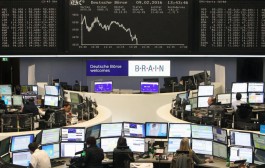














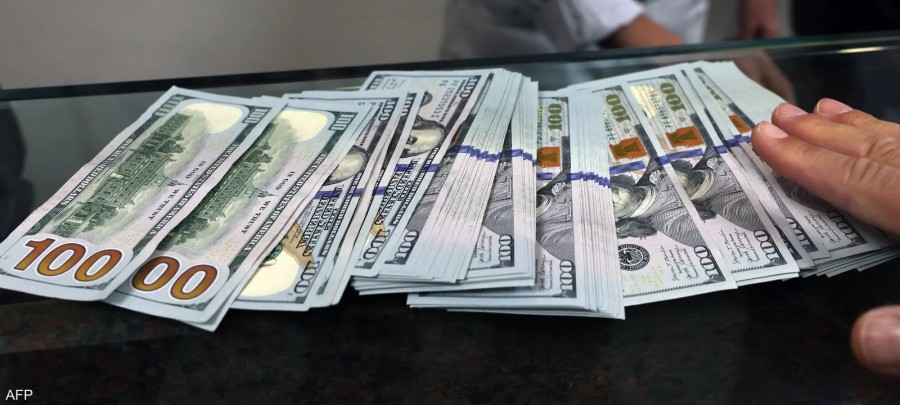


The US dollar dipped slightly on Wednesday, with attention fully focused on the conclusion of the Federal Reserve's final meeting of the year, which is likely to set the tone for global risk appetite going forward.
At 12:35 Saudi time, the dollar index, which tracks the performance of the US currency against a basket of six other currencies, fell by 0.2% to 99.002, down more than 8.5% so far this year.
Powell in the spotlight after the Fed's decision
The US central bank is widely expected to confirm a 25-basis-point interest rate cut later in the session, with Fed interest rate futures indicating a near 90% probability of a Fed rate cut, according to CME's FedWatch tool.
With the easing largely priced in, the focus is entirely on comments from Federal Reserve Chairman Jerome Powell, and especially any guidance on the path of interest rates in 2026.
Investors have reduced their expectations for interest rate cuts in 2026 due to persistent inflation concerns and expectations of greater resilience in the US economy.
Data released on Tuesday showed that job vacancies in the United States rose marginally in October after rising sharply in September.
In October, Powell's press conference triggered a sharp rise in the dollar, analysts at ING said in a note. These risks are presumably still present today as the controversy surrounding the decision and the fact that three consecutive rate cuts have brought the interest rate much closer to the neutral level are debated.
Clearly, pricing in a second interest rate cut in 2026 is at risk today, and it comes during a week in which investors are aggressively reassessing global central bank policy.
French economic recovery helps the euro
In Europe, the euro/dollar rose 0.1% to 1.1640, supported by a positive outlook for the French economy after a period of political turmoil.
The Bank of France will slightly raise its forecast for economic growth in France, said central bank governor Francois Villeroy de Galhau, who added that the country's economy had been resilient despite a climate of political uncertainty.
Villeroy de Galhau was commenting after French lawmakers narrowly approved the 2026 social security budget on Tuesday.
The risks surrounding the Federal Open Market Committee meeting are a negative factor for the EUR/USD pair. A bearish repricing at the short end of the US yield curve could push the pair back down to the 1.1585/90 area, ING said.
There are also external risks to the 1.1555/65 range in declining year-end markets. However, the EUR/USD may not remain there for long, and we will continue to favor a rebound – perhaps to 1.1800 – by year-end.
The pound rose 0.1% against the dollar to 1.3312, holding some ground ahead of Friday's growth data and next week's Bank of England policy meeting.
Elsewhere, the dollar/Canadian dollar rose 0.1% to 1.3853 ahead of the Bank of Canada's interest rate decision later in the session, which is expected to leave interest rates unchanged at 2.25%.
It appears too early for the Bank of Canada to decide on raising interest rates in 2026, and we see downside risks to the Canadian dollar today, ING added.
deflationary pressures in China
In Asia, the dollar/yuan traded little changed at 7.0639, even as Chinese inflation data, released earlier in the session, highlighted persistent deflationary pressures despite a modest rise in consumer prices.
The consumer price index rose 0.7% year-on-year in November, in line with market expectations and marking its highest annual reading since mid-2024.
However, the monthly figure fell by 0.1% compared to October, indicating weak underlying demand and suggesting that the annual increase was largely affected by base effects and food price volatility.
The most significant signal came from the manufacturing sector, where the producer price index fell 2.2% year-on-year in November, slightly worse than October's 2.1% decline.
This represents nearly four years of continuous deflation in industry prices, highlighting ongoing deflationary pressures in China’s manufacturing sector.
The dollar/yen fell 0.1% to 156.61, with the yen stabilizing after a sudden overnight drop that saw the pair threatened to break the 157 level, while also falling to a record low against the euro.
The Australian dollar/US dollar rose 0.2% to 0.6652, adding to the previous session's gains after the Reserve Bank of Australia kept its cash rate at 3.60%, but noted that inflation risks had tilted upward, suggesting the RBA's July-August-May easing cycle now appears to be on hold.