




























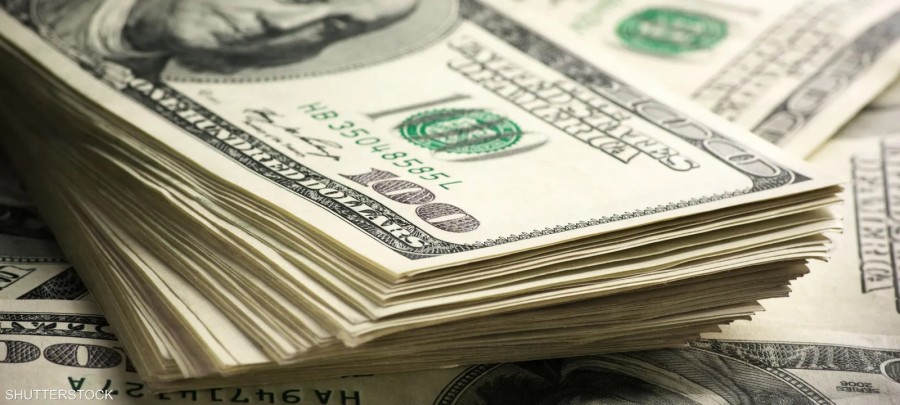


Bank of America's quantitative models point to further gains for the US dollar as geopolitical risks and market conditions continue to support demand for the currency as a safe haven.
Bank of America strategists stated in a note that their quantitative signals point to further strength in the US dollar, which remains the preferred relative safe haven for a broad range of investors. This view is supported by several typical indicators, including options flows and technical trend signals, which show continued demand for the dollar against major currencies.
Options market positions have increasingly shifted towards bullish bets on the dollar. Strategists said that option flows and divergence have moved broadly in favor of US dollar call options, while the bank's technical matrix has triggered bearish continuation signals for both EUR/USD and AUD/USD.
Bank of America's Cross-Asset System Switching (CARS) model also shows bearish signals for several currencies. In particular, equity and commodity factors are putting pressure on the Japanese yen and the Australian dollar, reinforcing the broader strength of the US dollar in current market conditions.
Despite these signals, strategists note that not all investors seem convinced of the dollar's strength. They pointed out that since the start of the US-Iran conflict, all EURUSD weakness has occurred during non-US trading hours.
During US trading hours, the euro actually rose against the dollar, indicating that US investors were selling the currency while Asian and European investors were buying it.
Beyond the dollar outlook, the bank's models highlight the Canadian dollar as a key opportunity. Bank of America Group stated that the bullish Canadian dollar remains its strongest signal, while both EUR/CAD and AUD/CAD appear vulnerable, with trend signals and events pointing to further declines in those pairs.
Strategists said they believe a bearish AUDCAD would also be attractive. Given how crowded out long positions were in the Australian dollar before the crisis, and how little it has fallen so far, a bearish Australian dollar might be where the best short-term value can be found.