


















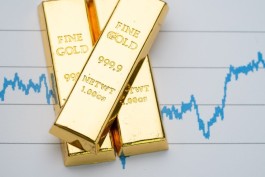










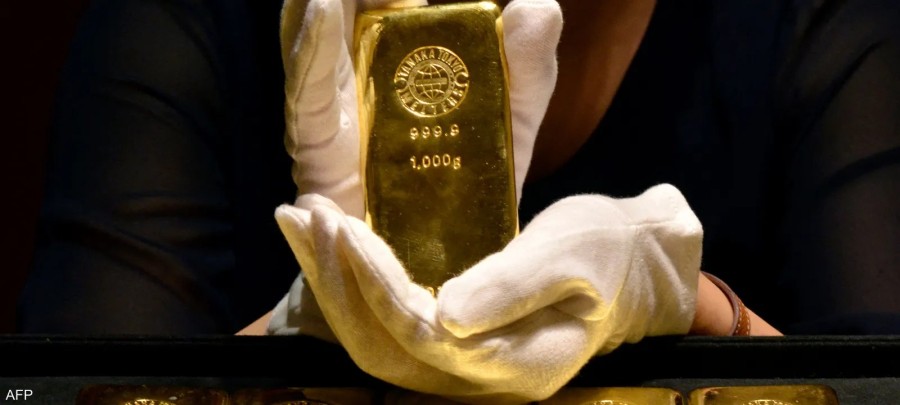


Gold prices rose during trading on Tuesday, supported by a decline in the US dollar and lower energy costs, after US President Donald Trump hinted at the possibility of the war in the Middle East ending soon.
This improvement in prices came amid easing concerns about a wave of inflation that could prompt central banks to tighten monetary policy. Lower inflation expectations also reduce the likelihood of interest rate hikes, which is a significant support factor for gold as a non-yielding asset.
The dollar's decline boosts the appeal of the precious metal.
The dollar fell by 0.4%, making gold priced in the US currency less expensive for holders of other currencies, which supported global demand for the precious metal.
Kelvin Wong, senior market analyst at OANDA, explained that gold's rise was driven by a flurry of news related to US President Trump's remarks, in which he suggested a possible de-escalation in the Middle East. Meanwhile, the sharp drop in oil prices could lead to a decline in inflation expectations in the coming period.
Oil prices also fell by more than 5% following Trump's remarks, which helped to calm fears of rising inflation resulting from higher energy costs.
Geopolitical tensions persist.
Trump, in turn, warned that the United States could sharply increase its military attacks if Iran tried to disrupt the movement of oil tankers through the Strait of Hormuz, the waterway through which about one-fifth of the world's oil supply passes.
The conflict has effectively closed the strait, leaving oil tankers stranded for over a week. Producers have also been forced to halt production as storage facilities reach capacity, driving energy prices sharply higher.
Gold prices fell by about 2% on Monday after high energy costs increased inflation fears, which in turn weakened the likelihood of an imminent interest rate cut by the U.S. Federal Reserve.
Watch for the Federal Reserve's decisions and inflation data.
Investors expect the Federal Reserve to leave interest rates unchanged at the end of its two-day meeting ending on March 18, according to data from the US Interest Rate Monitor tool available on Investing Saudi Arabia’s website.
Markets are now awaiting the release of the US Consumer Price Index for February on Wednesday, as well as the Personal Consumption Expenditures Index on Friday, which is the Federal Reserve's preferred indicator for measuring inflation.
Gold at settlement yesterday
Gold prices fell at the close of trading on Monday, as the dollar continued to rise at the start of the week, and expectations grew that the Federal Reserve would maintain its current level of monetary tightening, given the sharp rise in energy prices.
Gold futures for April delivery fell 1%, or $55, to $5,103.70 an ounce at the close.
Gold now
The price of gold in spot transactions reached $5,174.49 per ounce, up 0.7%.
Similarly, US gold futures for April delivery rose by 1.6% to $5,184.
Other minerals
In other metals markets, silver rose 2% to $88.73 an ounce. Platinum also climbed 0.7% to $2,196.35, while palladium slipped 0.3% to $1,685.01 an ounce.