





















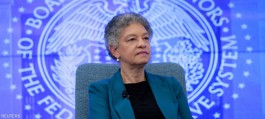








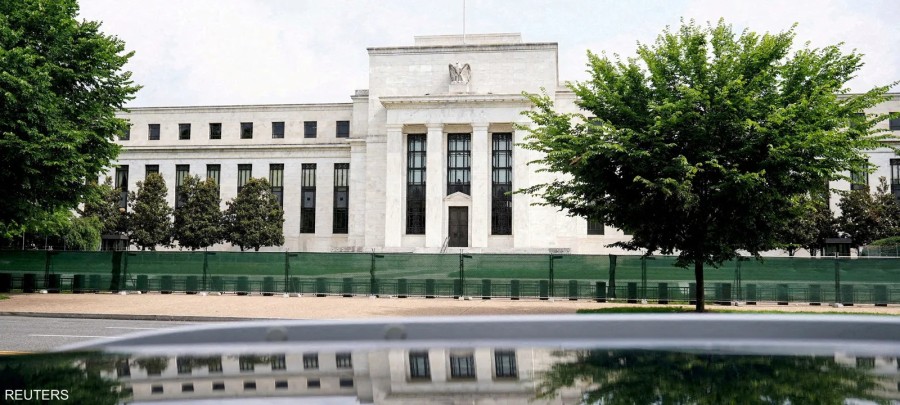


The U.S. Federal Reserve kept interest rates unchanged on Wednesday, January 28, in line with expectations, even as huge changes loom on the horizon regarding its long-term direction.
The Federal Reserve held interest rates steady at a target rate between 3.50–3.75% at its first meeting of 2026.
In their statement, the Federal Reserve's monetary policymakers said, after voting 10-2 to keep the bank's benchmark interest rate in the range of 3.50 to 3.75% following a two-day meeting, that economic activity is growing strongly.
Christopher Waller, the nominee to succeed Federal Reserve Chairman Jerome Powell when his term ends in May, and Stephen Miran, who is on leave from his position as an economic adviser in the White House, both opposed the decision and preferred a quarter-point cut in the interest rate.
The Federal Reserve ended 2025 with a third interest rate cut during its final meeting in December, following a series of decisions marked by hesitation and division among monetary policymakers.
The December cut of 25 basis points was in line with market expectations, but at the same time reflected the magnitude of the pressures and challenges the Fed faced throughout the year, both in terms of economic data and the tense political climate.
During the current year 2026, two meetings of the Federal Reserve will be held every quarter according to the following schedule:
First quarter: January 27-28 and March 18-19
In the second quarter: April 28-29 and June 16-17
Third quarter: July 28-29 and September 15-16
Fourth quarter: October 27-28 and December 8-9
Despite the strength of the economy, investors expect the Federal Reserve to cut interest rates later this year under the successor to its chairman, Jerome Powell, who is scheduled to take office in May.
Increased spending and tax cuts in the president’s flagship bill, One Big and Beautiful Act, passed last year, are also expected to boost growth in 2026.
A few days earlier, at the Davos forum, US President Donald Trump boasted about the rapid economic growth in the United States, after figures showed GDP growth at an annual rate of 4.4% in the third quarter of 2025, driven in part by the artificial intelligence boom.
The Federal Reserve Bank of Atlanta’s GDPNow model predicts growth will accelerate to 5.4% in the final quarter of last year.
In his remarks following the decision to hold the Fed in place, Federal Reserve Chairman Jerome Powell said:
Inflation remains relatively high compared to the target rate, and the Fed is well-positioned to determine the extent and timing of any further interest rate adjustments. Powell indicated that current monetary policy is appropriate at this time.
He confirmed that core inflation likely reached 3% in December, but is still on track to return to the Federal Reserve's target, adding that the Fed's preferred personal consumption expenditures price index showed continued inflation in goods prices with a slight decline in the services sector.
Powell added that the labor market may be on its way to stabilization.
He explained that the economy is experiencing a decline in the workforce as a result of reduced migration of workers, and that inflation has fallen from 2022 levels but is still high compared to targets.
He stressed that monetary policy contributes to the stability of the labor market, emphasizing that the Federal Reserve is mandated to achieve price stability, ensure full employment, and bring inflation back to the 2% level.
He added: These high readings largely reflect inflation in the goods sector, which has been boosted by tariffs. In contrast, inflation appears to be continuing to decline in the services sector.
He said: Future interest rate movements have not yet been decided, noting that monetary policy is not on a predetermined path, and we will make our decisions on a meeting-by-meeting basis.
Powell declined to comment on questions about the future of the US dollar and the exchange rate, saying it was not within his purview.
Meetings in 2026?
After the curtain fell on the first Federal Reserve meeting of 2026, huge tasks await it in the upcoming meetings... and anticipation of 7 crucial meetings to follow.
It should be noted that the Federal Open Market Committee has the right to set interest rates whenever it wants, a power it has used previously during economic emergencies.
However, the committee usually follows a schedule of eight scheduled meetings to determine interest rates.
The Fed faces key milestones in 2026, including the end of Jerome Powell's term in May. This comes amid a major question that remains open: Can the Fed regain internal consensus and external independence in a highly sensitive political year?