





















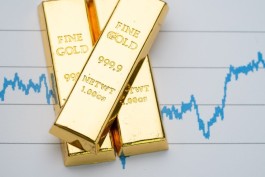















Michael Widmer, head of metals research at Bank of America, believes that gold will remain a key hedge in investment portfolios this year, with expectations that its price will average $4,538 per ounce in 2026. Meanwhile, historical market data suggests that silver may experience exceptional price peaks ranging between $135 and $309 per ounce.
Widmer emphasized that gold continues to stand out as a hedge and a potential source of return, explaining that tighter market conditions and high earnings sensitivity make the yellow metal a pivotal element for hedging and enhancing returns during 2026.
Bank of America's outlook is based on expectations of declining supply and rising costs in the gold mining sector. Widmer anticipates that the 13 largest North American mining companies will produce approximately 19.2 million ounces this year, a 2% decrease compared to 2025, arguing that many current production estimates are overly optimistic.
With Bank of America predicting continued strength in gold as a safe haven and silver reaching historic highs, the need for exceptional analytical tools is growing. Subscribe to InvestingPro with WarrenAI to analyze the average price forecast of $4,538 and assess the potential for silver to rise to $135. Take advantage of New Year's discounts of up to 55% and enjoy the experience in Arabic.
Higher costs and stronger profitability for gold producers
According to estimates, average sustainable overall costs are expected to rise by about 3% to reach approximately $1,600 per ounce, a level that slightly exceeds average market expectations.
In contrast, Widmer expects a strong jump in the profitability of mining companies, with total earnings before interest, taxes, depreciation and amortization rising by 41% to reach about $65 billion during 2026, which enhances the attractiveness of the sector despite rising costs.
Bank of America expects gold to average a real price of $4,538 per ounce in 2026, with silver, platinum and palladium prices also expected to rise, signaling an overall positive outlook for precious metals markets.
Silver: Between risk and double return
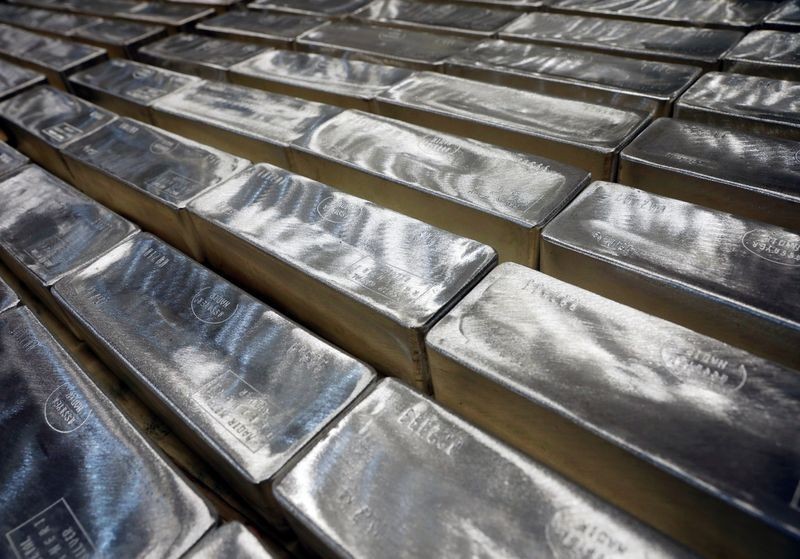
Widmer believes that silver may be more attractive to investors seeking higher risk for greater upside opportunities, noting that the current gold-to-silver ratio near 59 means that silver still has room for relative superiority over gold.
He cites history, explaining that the lowest level of that ratio in 2011 at 32 indicates the possibility of the price of silver reaching $135 per ounce, while the low recorded in 1980 at 14 suggests the possibility of the price reaching around $309 per ounce.
In his annual seminar held in December, Widmer pointed out that strong upward waves for gold do not end simply because prices rise, but usually stop only when the underlying factors that sparked the rise in the first place fade away.
Gold: Between overbuying and underinvestment
Despite indications that gold has reached excessive buying levels, Widmer emphasizes that the yellow metal still suffers from a lack of investment weight within portfolios, which means there is ample room to enhance its role as an effective diversification tool.
He adds that he does not see an end in sight to the environment that supports the rise of gold, predicting that prices will be pushed towards the level of $5,000 per ounce during 2026, according to estimates by Bank of America.
He notes that achieving this price target requires only a 14% increase in investment demand, a level close to the average demand recorded during recent quarters, while reaching $8,000 an ounce requires a larger jump in demand of about 55%.
Investment demand and central banks
Investment demand, particularly from individual investors, has accelerated significantly in recent months, with gold-backed exchange-traded fund (ETF) inflows reaching their highest levels since 2020. However, Widmer believes that a significant segment of professional investors remains relatively uninvolved in the gold market, a trend that could change in the coming period.
Currently, gold represents about 4% of total financial markets, but high-net-worth investors allocate only 0.5% of their assets to the yellow metal, reflecting a clear allocation gap.
This increased interest comes at a time when doubts are growing about the efficiency of the traditional 60/40 asset allocation model, as recent studies indicate that allocating 20% of a portfolio to gold may be an effective strategy, and even ratios as high as 30% may be justified at present.
Gold is a pillar of diversification that cannot be ignored.
Widmer emphasizes that the benefits of gold are not limited to individual investors, but extend to central banks, which are expected to continue buying gold even after their reserves reach record levels in 2025.
He notes that central banks’ gold reserves have already surpassed their holdings of US Treasury bonds, with gold averaging about 15% of total reserves, while models show that the optimal level may approach 30%.
Given gold’s strong performance during 2025, Widmer believes that ignoring it has become more difficult for portfolio managers, especially as it is among the best performing assets in recent years. He emphasizes that US monetary policy will remain a crucial factor in gold’s movements during 2026, as a downward trend in interest rates is sufficient to support a new upward wave for the yellow metal.