









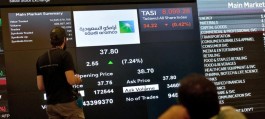















Natural gas prices in Europe fell after US President Donald Trump predicted that the war with Iran would end soon, at a time when he is under increasing pressure over the impact of the conflict on global energy markets.
Benchmark gas futures plunged as much as 17% on Tuesday, the biggest daily drop since 2023, while oil prices also saw a significant decline. Trump indicated he did not believe the war would end this week, but asserted that military operations were progressing faster than anticipated and could be resolved very soon.
In this context, ING Bank analysts Warren Patterson and Ewa Manthi believe that Trump's statements provided some relief to energy markets, but they will not be enough on their own to push prices into a sustained decline, as the resumption of energy flows through the Strait of Hormuz will remain the decisive factor for achieving a stable drop in prices.
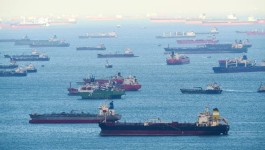
The Strait of Hormuz is at the heart of the energy crisis.
Trump indicated that the US Navy might escort oil tankers through the Strait of Hormuz to protect shipping. Meanwhile, French President Emmanuel Macron proposed a joint naval mission to secure vessels in this vital waterway once the initial phase of the conflict subsides.
The Strait of Hormuz is a vital artery for global energy trade, with about one-fifth of the world's liquefied natural gas flows passing through it, most of them from Qatar's largest liquefied natural gas production facility, which has been out of operation since last week.
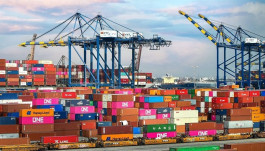
Despite Iran's repeated assertions that the strait remains open to navigation, shipping traffic through it has largely ceased since the outbreak of the conflict, causing widespread disruption to global energy trade.
Escalating geopolitical risks
Attacks in the region have not abated yet, as several Middle Eastern countries announced on Tuesday that they had detected missile threats, sirens sounded in some areas, and drones were intercepted.
This conflict, now in its second week, has caused profound disruption to the global oil and gas trade, threatening the biggest supply shock since Russia’s invasion of Ukraine in 2022.
Europe appears to be in a particularly delicate position, as its gas reserves are unusually low, and European countries need to import large quantities of fuel during the summer to replenish stocks before the coming winter.
Fierce global competition for gas shipments
Several LNG tankers have already begun changing course towards Asia, where buyers are increasingly reliant on Middle Eastern supplies and are now scrambling to find alternative energy sources.
In this context, Ben Samuel, an energy market analyst at Marex, explained that LNG shipments will see very fierce competition among buyers, adding that this competition will remain strong until some stability returns to the Gulf region.
In trading, Dutch gas futures for delivery next month, the benchmark for gas prices in Europe, fell 15% to €47.99 per megawatt-hour by 8:41 a.m. Amsterdam time.