





























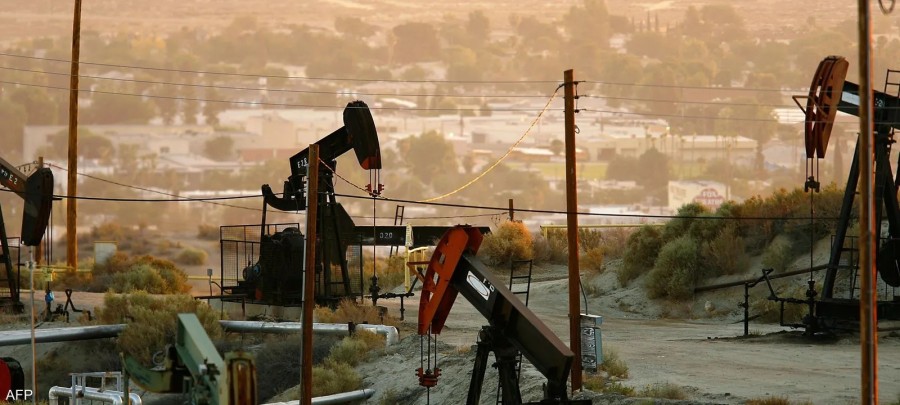


Oil prices fell on Monday as crude exports from the Middle East rose, while a drawdown of oil stockpiles in the Group of Seven countries added new supplies, despite continued supply concerns amid attacks targeting ships in the Strait of Hormuz.
Brent crude futures fell 0.34% to $101.90 a barrel by 01:15 GMT, while U.S. West Texas Intermediate crude was at $90.49 a barrel, down 0.68%.
Brent crude gave up most of its gains last week, while West Texas Intermediate fell 1.6%, after the Group of Seven nations agreed on Friday to release 100 million barrels of diesel and crude from emergency reserves and pledged to refrain from imposing restrictions on energy exports following pressure from U.S. President Donald Trump.
The drawdown of inventories will add to Middle East crude exports that exceeded pre-war levels in four of the seven days during the last week of September, Reuters reported today, citing shipping data, despite attacks on ships transiting the Strait of Hormuz.
Brent crude is still up about 70% since the beginning of the year, as the US-Iran trade war enters its eighth month, with Washington and Tehran making no progress toward a permanent agreement and the full reopening of the Strait of Hormuz.
The United States announced its intention to deploy an additional aircraft carrier and 10,000 additional troops to the Gulf region.
The risks of Hormuz remain at the forefront
The risks surrounding shipping in the Strait of Hormuz persisted despite improved crude oil flows, as the UK Maritime Trade Operations (UKMTO) said on Sunday that it had received a report from a tanker stating that it had been struck by an unidentified projectile inside the strait, causing damage to the engine room.
The authority added that the crew members were safe, and there were no reports of an environmental impact at the time of the statement. The incident follows several reported attacks on tankers this week, keeping the risks associated with transiting one of the world's most important energy chokepoints in the minds of the market.
Meanwhile, political developments between Washington and Tehran have shown that communication channels remain open, though no agreement has yet been reached. Iranian Deputy Foreign Minister Kazem Gharibabadi stated that the US position on the seven-day plan proposed by Foreign Minister Abbas Araqchi was conveyed through intermediaries and is currently under review in Iran.
He added that Tehran will take the appropriate action after the review of the American position is completed, noting that Iran is simultaneously preparing for any other scenario.
Yemen launches liberation battle
The oil movements coincided with new military developments in Yemen, after the head of the Presidential Leadership Council, Rashad Al-Alimi, announced the start of military operations to regain the remaining parts of the country and extend state authority over the entire national territory, after what he described as exhausting the opportunities for de-escalation.
The Yemeni armed forces also announced the start of the liberation battle to restore state institutions and areas under Houthi control.
For his part, the spokesman for the coalition supporting legitimacy in Yemen, Turki al-Maliki, said that the coalition will continue to provide operational support to the Yemeni armed forces, pointing to the Houthi threats related to the southern Red Sea, the Bab al-Mandab Strait, and freedom of navigation and international trade.
These developments put two key shipping and energy routes in the region, the Strait of Hormuz and Bab el-Mandeb, in the market's crosshairs, at a time when regional crude flows are trying to recover from the disruptions of recent months.
OPEC+ freezes November production
On the supply side, key members of OPEC+ kept their oil production policy unchanged for November, continuing to freeze supplies for the second month in a row after six months of increases.
The decision came after producers completed in September the rollback of a portion of the voluntary cuts agreed upon in 2023, amounting to 1.65 million barrels per day, while another portion of the cuts, amounting to about 2 million barrels per day, remains in place until the end of 2026.
The decision includes Saudi Arabia, Russia, Iraq, Kuwait, Kazakhstan, Algeria, and Oman. The seven countries affirmed their commitment to full compliance with the Declaration of Cooperation, with monthly meetings to review market conditions continuing, and the next meeting scheduled for November 1st.
In Iran, President Masoud Pezeshkian accepted the resignation of Oil Minister Mohsen Paknejad and appointed the CEO of the National Iranian Oil Company, Hamid Pourda, as acting minister, in a change that comes as Iran’s energy sector remains at the heart of the fallout from the war and disruption to exports.