



























Oil held onto its three-day gains after President Donald Trump laid out sweeping new demands on Iran, adding to the uncertainty over prospects for a deal to reopen the vital Strait of Hormuz.
Brent crude traded near $88 after rising 5% in the previous session, while West Texas Intermediate crude was around $82.
Trump demanded that Iran pay compensation for all the people it killed in conflicts, after Tehran reiterated its demands for compensation as part of talks aimed at ending the conflict.
Trump said in a social media post that he would firmly put the new demands on the table in any future negotiations, all of them.
Hardening of positions complicates the course of negotiations.
Given these hardline positions, it is unlikely that Tehran and Washington will be able to agree on any immediate deal that could help end the war and reopen Hormuz.
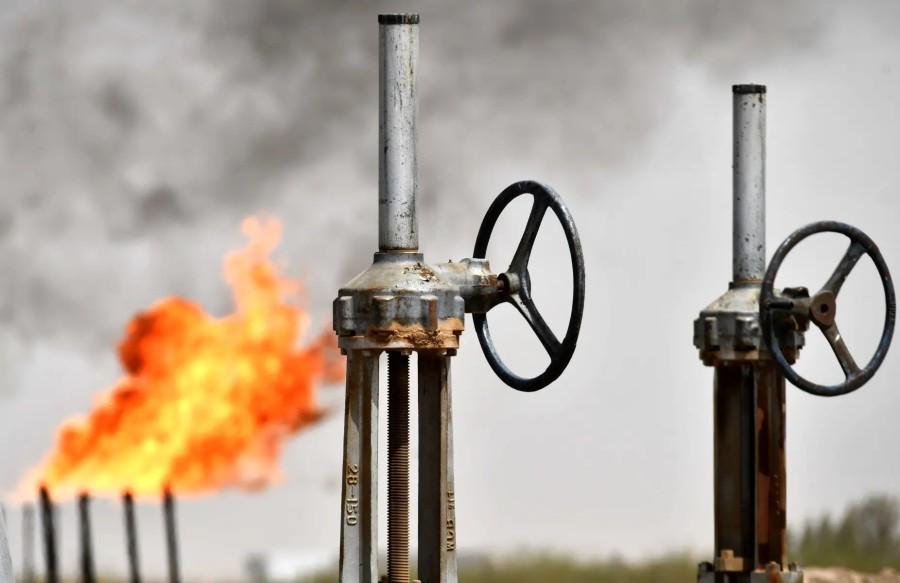
Crude oil has jumped by about 45% this year after months of volatile trading, as the war in the Middle East disrupted flows and damaged infrastructure.
Product prices rose at a faster pace, with diesel also benefiting from the impact of the Russian-Ukrainian war, which strained supplies. Record prices for this key European fuel jumped on Monday, more than doubling in 2026.
Iran and Oman are negotiating an agreement to reopen the waterway, although Tehran reiterated on Monday that reaching an agreement would require the United States to end its blockade and pay compensation for damages.
Before the war, about one-fifth of the world's oil and liquefied natural gas production was shipped through Hormuz to global markets.
Bart Melek, global head of commodity strategy at TD Securities, said that given the strait remains closed, global inventories have fallen sharply, and flows are still far from normal levels, we could see strong short covering.
He added: We still expect Brent to trade between $10 and $15 higher than current levels.
Trump is angry at Iran's demands
Trump said on Monday that compensation for Iran was never mentioned in any of our negotiations or meetings.
But a 14-point memorandum of understanding agreed upon by Tehran and Washington in June included plans for the United States and its partners to develop a $300 billion fund for Iran’s post-war rehabilitation and economic development.
The US president had indicated on Sunday that he was prepared to allow economic pressure to build up on Iran, rather than launch new military strikes to force the reopening of Hormuz , where visible traffic remains very limited.
Amrita Sen, founder and director of market intelligence at Energy Aspects, said in an interview with Bloomberg Television on Monday that about five ships are crossing daily, a level far lower than the roughly 14 ships a day seen after the United States and Iran reached a memorandum of understanding in June.
Further indications of global market conditions will come later on Tuesday from the U.S. Energy Information Administration, which is scheduled to release its monthly Short-Term Energy Outlook report.
Commercial crude oil inventories in the country fell last month to their lowest level since 2018, while stocks in the strategic petroleum reserve dropped to their lowest level in more than four decades.
Latest price movements:
Brent crude for October delivery was little changed at $87.80 a barrel at 11:12 a.m. in Singapore.
West Texas Intermediate crude for September delivery rose 0.2% to $82.27 a barrel.
Diesel rose 0.4% to $1,309.75 a ton on the ICE Futures Europe exchange.