

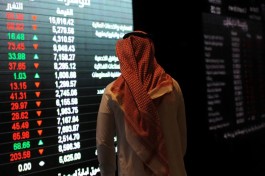
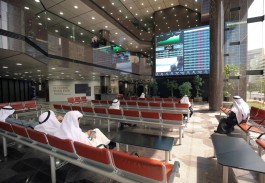
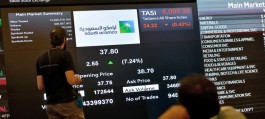
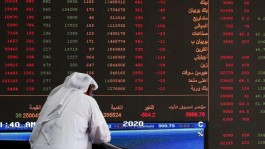









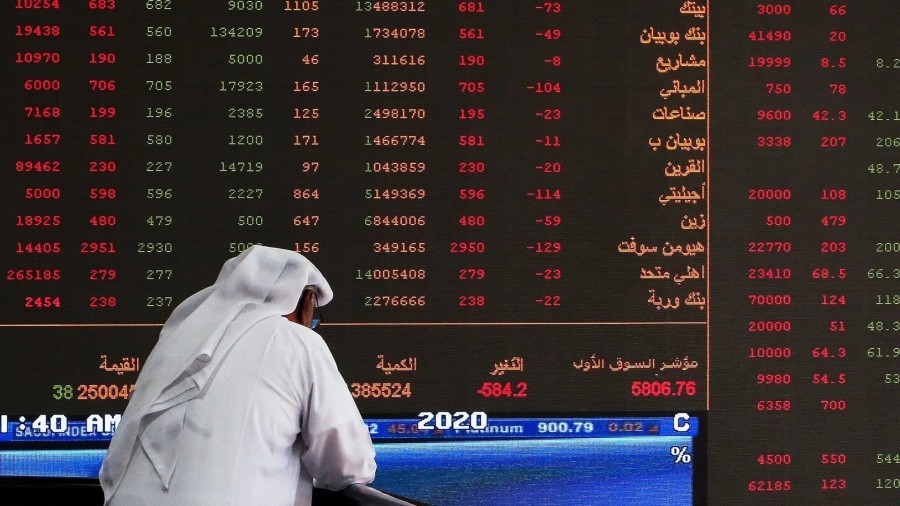


The Tadawul All Share Index (TASI) is trading at 10,651.47 points, down 30.35 points (-0.28%) from yesterday's close of 10,681.82 points. During the session, the index moved within a range between 10,638.83 (low) and 10,695.72 (high), continuing its downward trend and gradually approaching its 52-week low of 10,193.83 points (compared to a high of 11,781.68 points). The index remains under clear pressure without a decisive recovery signal yet.
The most significant external pressure comes from the decline in oil prices ; Brent crude is down about 1% today, reaching $99.09 , and West Texas Intermediate is down about 2% to $90.60 —continuing a downward trend that has persisted for several sessions, driven by a relative improvement in regional supplies and anticipation of a potential diplomatic breakthrough between Washington and Tehran. Meanwhile, global markets appear divided: Dow Jones futures are up 70 points, while the German DAX (+0.07%) and the Japanese Nikkei (+1.38%) are rising strongly, supported by renewed appetite for technology and chip stocks.
Stock under scrutiny: Al Rajhi Bank (1120)
Al Rajhi Bank's stock declined today by 2.20% to SAR 64.60 (session range: SAR 64.35-65.05), with a trading volume exceeding 2.46 million shares—it remains one of the most actively traded stocks in the market, but the trend is the complete opposite of what was previously expected. Today is the first trading session after the entitlement date for its cash dividends for the first half of 2026 (SAR 1.26 per share, totaling SAR 7.56 billion, with entitlement yesterday, September 21). Dividing the dividend value by the previous closing price (around SAR 66), the expected technical adjustment for the entitlement alone is approximately 1.9%; meaning the actual decline (-2.20%) exceeds the purely technical adjustment by only a small margin (around 0.3 percentage points). This indicates that the market is almost fully absorbing the impact of the dividend without any significant additional buying demand to offset the difference—a pattern closer to neutrality than to the strong institutional confidence we previously assumed.
Riyadh Cables stock, which entered the entitlement date with a distribution of 2.25 riyals per share, shows a similar pattern: a decline of -2.99% to 103.90 riyals, which is also consistent with a technical adjustment to the entitlement without a clear opposing buying momentum.
Al Rajhi's governing levels: The current session range is between 64.35 (immediate support) and 65.05 riyals (immediate resistance); breaking 64.35 with volume may open the way to testing lower levels, while any real recovery attempt needs to steadily surpass 65 riyals.
A worthwhile alternative to watch: Saudi Ground Services (SGS) shares are leading the gainers, rising 8.14% to SAR 22.44 with a trading volume of 1.54 million shares—making them the clearest candidate for today's standout stock in terms of momentum. The catalyst is now clear: the company announced today a cash dividend for the second half of 2025 totaling approximately SAR 188 million (USD 50.13 million), at SAR 1 per share (a 10% distribution of the par value), distributed across approximately 188 million eligible shares. The entitlement date is October 6, 2026, and the actual distribution will take place on October 20, 2026. This announcement perfectly explains today's sharp price jump, as it is typically interpreted as a sign of operational confidence and strong cash flow from the company's management, especially since it comes without any immediate entitlement adjustment (entitlement is in two weeks, not today).
Roundup of impactful news
Al Rajhi and Riyadh Cables: Both entered today’s session after the entitlement date for their distributions (1.26 riyals and 2.25 riyals per share respectively), and declined today by a percentage consistent with the technical entitlement adjustment (-2.20% and -2.99% respectively) — Full details in the Stock Under the Microscope section above.
Aramco (2222): Relatively stable, with a slight decline of -0.23% to -0.31% (according to the time snapshot) to around 25.60-25.62 riyals, relatively resisting the sharp decline in global oil prices.
Breaking (Bloomberg, hours ago): Aramco has informally informed at least three Asian refineries that they will soon be able to receive oil shipments from the Red Sea port of Yanbu again, without specifying a timeline. This is the first indication that loadings from the port, which has been suspended for about a week following the East-West pipeline attack, may resume. If officially confirmed, this development could gradually reduce the geopolitical risk premium currently priced into Aramco and the entire oil sector.
The most significant external pressure comes from the decline in oil prices; Brent crude fell by about 1% today to $99.09, and West Texas Intermediate (WTI) by about 2% to $90.60. This decline deepened following an urgent report from Japan's Kyodo News Agency (citing a senior Iranian official) stating that Iran offered Washington to reopen the Strait of Hormuz within seven days, provided the United States lifts its naval blockade of Iranian ports and ceases its military operations near the strait. The offer was conveyed through an intermediary and is scheduled to be discussed with mediating countries on the sidelines of the UN General Assembly meetings in New York this week—the first tangible diplomatic signal in weeks that may explain much of the current easing in crude prices, despite the strait remaining effectively closed.
Saudi Ground Services: Today announced cash dividends for the second half of 2025 of 1 riyal per share (188 million riyals total), with entitlement on October 6 and actual distribution on October 20 — the direct catalyst behind the stock's 8.14% jump today (full details in the Stock Under the Microscope section).
Investor flows: A recent report showed that Saudi stocks attracted about 1.26 billion riyals from local investors last week, an indication of continued local confidence despite the fluctuation of the general index.
Warning reading: An analysis published an hour ago raises a direct question about whether TASI is approaching a technical danger zone, given its approach to its lowest levels since the end of last July.
Liquidity and Sector Map
The most active (by liquidity) stocks are diversified across sectors: Laden Investment (+5.99%, 4.64 million shares) leads the way, followed by Americana (-0.41%, 2.71 million shares), Al-Ahli (+0.45%, 2.6 million shares), Al-Rajhi (-2.20%, 2.46 million shares), and Petro Rabigh (-3.02%, 2.12 million shares) — the latter clearly reflects the pressure of declining oil prices on the refining and petrochemicals sector.
In terms of the highest actual gains, Saudi Ground Services (+8.14%) leads the way, far ahead of the rest of the market. The banking sector appears divided: Al-Ahli, Riyad Bank, and First Saudi Bank are in positive territory by a narrow margin, while Al-Rajhi, Al-Inma, and Al-Bilad are under pressure (the latter two due to factors unrelated to merit). The petrochemical sector is mixed: SABIC and Kayan are in slightly positive territory despite the pressure from oil prices, while Petro Rabigh is declining more significantly.
This distribution — a specific decline in post-rights shares, clear pressure on the sector directly linked to oil prices (Petro Rabigh), and neutrality or slight gains in the rest of the leading sectors — reflects a market movement driven by factors specific to each stock (rights, oil) rather than a unified general trend.
Trader's guide for the rest of the session
Critical barrier: The 10,695.72 point level (session high) is the first test of regaining positive momentum, while breaking 10,638.83 points (session low) remains an indication of continued downward pressure towards the further support zone near 10,600 points, with the 52-week low (10,193.83 points) remaining as a long-term defense line worth watching if the pressure continues.
Afternoon liquidity: With trading volumes remaining below average, watch to see if the auction period will see a return of institutional liquidity that breaks the current narrow volatility, especially given the continued pressure on Brent.
Risk Management: For those holding Al Rajhi and Riyadh Cables, the current decline (-2.20% and -2.99%) appears to be largely a normal technical adjustment due to the ex-dividend date and not a fundamental negative signal for either company—avoid panic selling if you are already a shareholder. As for Saudi Ground Services (+8.14%), its catalyst is now certain (dividends), but it is still advisable to be cautious about chasing the move after such a sharp rise; set a clear stop-loss before any new entry, as part of the rally may have already priced in the news.