











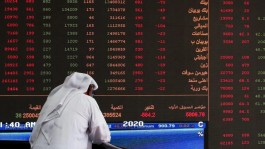


























Morgan Stanley strategists warned that U.S. stocks could fall by as much as 7% in the near term if energy prices rebound or bond market volatility increases, leading to tighter financial conditions and higher financing costs.
Michael Wilson, the bank’s chief strategist, said the S&P 500 could fall to 7,100 points before resuming its upward trajectory near the end of the year if stock valuations come under pressure from significantly higher energy prices or tighter financial conditions, according to Bloomberg.
Wilson explained that rising energy prices represent one of the most significant risks to stock valuations, as higher fuel costs can increase inflationary pressures and raise operating costs for companies, while higher bond yields may prompt investors to reassess the attractiveness of stocks, especially with the rising cost of borrowing.
The market is also becoming increasingly sensitive to movements in the bond market, as sudden jumps in Treasury yields can lead to tighter financial conditions, putting pressure on growth stocks and highly valued companies and increasing market volatility.
Wilson expects volatility levels to rise as the US midterm elections approach in November, amid the likelihood of increased uncertainty surrounding economic and financial policies.
Despite the short-term risks, Morgan Stanley's chief strategist believes that the strength of US corporate earnings could support the index's return to an upward trend towards the end of the year, targeting the S&P 500 to reach 8,000 points, a level that represents an increase of nearly 5% compared to its current levels.
Morgan Stanley's forecast reflects a dual scenario for the market; rising energy and bond volatility could put pressure on stocks in the near term through inflation and the cost of financing, while strong corporate earnings could limit the downturn and support a later recovery in the indices.
Therefore, energy price movements and Treasury bond yields, along with corporate earnings developments, will remain among the most prominent indicators that markets monitor to determine the direction of US stocks in the coming period.