






















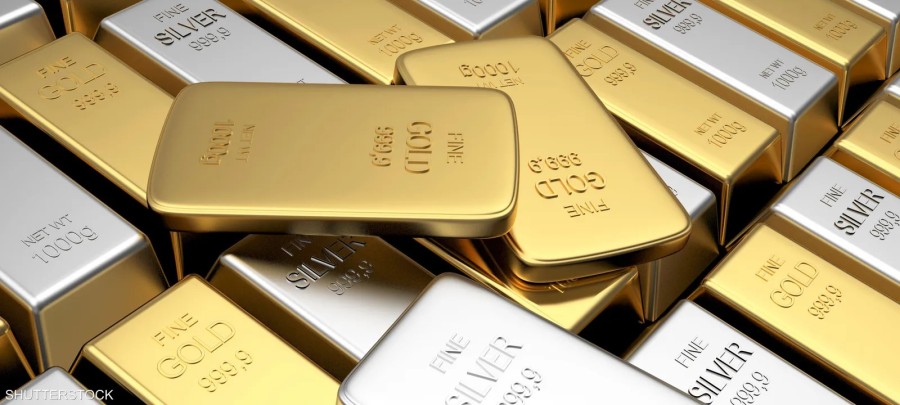


Global gold prices fluctuated during trading on Wednesday, amid continued uncertainty over developments in the Middle East and stronger-than-expected US inflation data, which reduced market hopes for a US interest rate cut this year.
US inflation reshapes interest rate expectations
Recent US inflation data has undermined expectations that the Federal Reserve would cut interest rates in the coming months.
Kyle Rodda, senior financial markets analyst at Capital.com, said that the inflation data released in the United States significantly weakened, if not completely eliminated, hopes for an interest rate cut.
He added that markets have begun pricing in a new possibility: that interest rates could be raised again before the end of the year, which is putting direct pressure on gold.
This is because gold does not generate a periodic return, making it less attractive when interest rates rise or when expectations increase that they will remain high for a longer period.
Data showed that US consumer prices continued to rise during April, recording the largest annual increase in three years.
This has led to a sharp reduction in the likelihood of an interest rate cut during 2026.
According to a forecast monitoring tool, traders have largely ruled out an interest rate cut this year, while markets now see a 30% probability of an interest rate hike by December.
Markets are awaiting producer data and the Trump-Xi summit.
Investors are now turning their attention to the US Producer Price Index data, due later today, which may provide further clues about the direction of inflationary pressures.
Markets are also closely watching the upcoming meeting between US President Donald Trump and Chinese President Xi Jinping in Beijing, which runs from Thursday to Friday.
The meeting is expected to cover multiple issues, including trade relations between the world's two largest economies, as well as geopolitical developments in the Middle East.
The Strait of Hormuz keeps geopolitical tensions alive
Trump said on Tuesday that he does not believe he will need China's help to end the war with Iran, despite fading hopes for a lasting peace agreement.
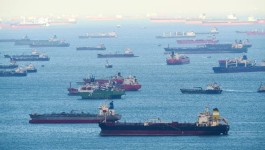
At the same time, Tehran has strengthened its grip on the Strait of Hormuz, one of the world's most important maritime routes for oil transport.
Continued tension in this region is supporting energy prices, which is raising inflationary pressures globally and limiting gold's ability to fully benefit from its traditional role as a safe haven.
India is driving up local gold and silver prices.
Gold and silver futures in India jumped after the government in New Delhi raised import duties on the two metals to 15% instead of 6%.
This decision comes as part of the Indian authorities' efforts to curb foreign purchases and reduce pressure on the country's foreign exchange reserves.
Given that India is one of the world's largest consumers of gold, any changes in its trade policies directly affect the movement of the global market.
Gold between two opposing forces
Gold currently stands between two opposing forces. On the one hand, geopolitical tensions in the Middle East provide support for the precious metal as a safe haven in times of crisis.
On the other hand, the strength of US inflation and the increasing likelihood of continued high interest rates, and even the possibility of raising them again, are putting downward pressure on prices.
For this reason, the movement of gold in the coming period seems to depend on the results of upcoming inflation data, the decisions of the Federal Reserve, and developments in US relations with both Iran and China.
Gold at settlement yesterday
Gold prices fell at the close of trading on Tuesday, pressured by uncertainty surrounding the future of global borrowing costs, following the fading hopes for a peace agreement between the United States and Iran, which pushed oil prices higher and increased inflationary concerns.
Gold futures for June delivery fell 0.89%, or $42, to $4,686.70 an ounce.
Gold now
The price of gold in spot trading fell 0.1% to $4,710.37 an ounce, moving further away from its three-week high reached in the previous session.
In contrast, U.S. gold futures for June delivery rose 0.7% to $4,717.50 an ounce, indicating continued anticipation and uncertainty about the precious metal's future direction.
Performance of other precious metals
Spot silver prices settled at $86.53 an ounce, after hitting their highest level since March 11 during the session.
Platinum fell 0.3% to $2,120.29 an ounce.
In contrast, palladium rose 0.1% to $1,492.75 an ounce.