




































Oil prices jumped after new attacks broke out in the Middle East, and the United States signaled it would increase economic pressure on Iran's trading partners.
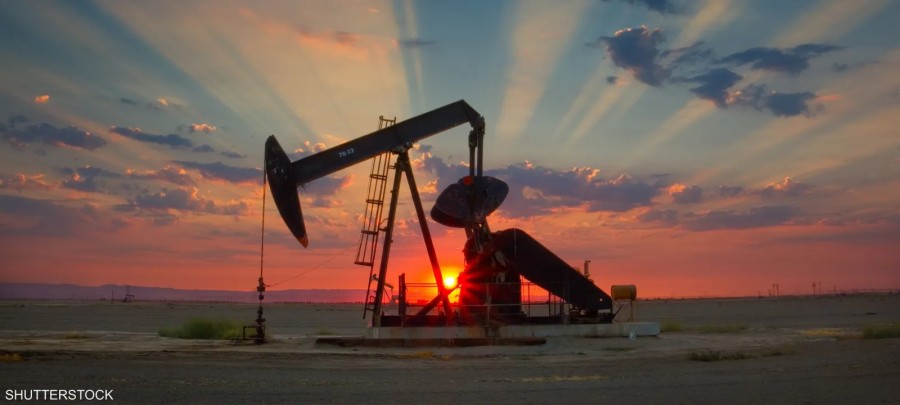
Brent crude for November delivery rose above $90 a barrel, while West Texas Intermediate crude approached $85.
US forces targeted Iranian missile launch sites on Sunday that were preparing to fire mines into the Strait of Hormuz, according to US Central Command. The Jordanian military intercepted eight missiles after the Iranian military said it had attacked targets linked to US forces in the kingdom, according to AFP.
U.S. Treasury Secretary Scott Bisent said Washington is likely to unveil new secondary sanctions against Iran weekly, starting with banks, according to an interview with Reuters over the weekend. Bisent added that the next step could involve completely isolating an institution from the dollar-based financial system.
Chris Weston, head of research at Pepperstone Group Ltd, believes that a direct attack on Iranian missile launch sites does little to advance negotiations, nor does Iran's missile launches into Jordan. He added: But there seems to be limited appetite, at this stage, for pushing crude prices to much higher levels.
Hormuz remains a key hub for oil flows
Crude oil prices are ending a volatile month, with Brent crude futures trading within a range of around $17 a barrel. Prices were influenced by intermittent efforts to end the fighting, along with Washington's pledge to try to force Tehran to capitulate by intensifying efforts to isolate and cripple the Iranian economy. As part of this pressure, US forces continue to enforce a naval blockade on the country's ports.
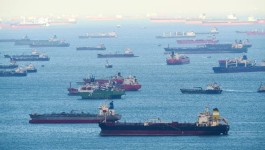
Even without a peace agreement between Washington and Tehran, between 6 million and 8 million barrels of crude oil pass through Hormuz daily, according to traders who monitor shipments.
Separately, Iran’s semi-official Mehr news agency reported that ship traffic along a route approved by Iran is taking place on a limited basis, saying that ships are paying fees.
The top U.S. commander in the Middle East said late last week that U.S. forces had cleared Iranian mines from the Strait of Hormuz, declaring shipping lanes open, though Washington's allies expressed skepticism about the claim. The waterway connects the Persian Gulf to global markets, and its status has remained a point of contention since the war began in late February.
Washington turns to Venezuelan oil to bolster its reserves
Beyond the Middle East, Washington moved to seize direct control of more than 65 billion barrels of Venezuelan oil reserves, with a planned 100-year concession encompassing 17 fields. President Donald Trump said the crude would be used to replenish the depleted U.S. strategic petroleum reserve.
The conflict between the United States and Iran, along with the war between Russia and Ukraine, has driven up product prices, particularly diesel. Trump is scheduled to meet with refining executives on Tuesday to discuss ways to lower prices. Average retail diesel costs have risen 57% this year, according to the American Automobile Association.
Analysts at Goldman Sachs Group Inc. wrote in a note: “The increasing attacks on refineries in the Middle East and Russia have further tightened already strained global refining capacity.”
The bank more than doubled its estimates for US and European diesel margins above Brent crude to $63 and $49 per barrel in 2027.
Trading in Brent crude futures may be lower than usual during Monday's session, as parts of the UK, including England, celebrate a national holiday.
Latest price movements
Brent crude for November delivery rose 2.6% to $90.39 a barrel at 9:56 a.m. in Singapore.
In early trading, the contract jumped as much as 2.9%.
West Texas Intermediate crude for October delivery rose 2.4% to $85.38 a barrel.