































Asian stocks and Treasury bonds rose as oil prices fell, while weaker US jobs data eased pressure on the Federal Reserve to continue raising interest rates. The euro continued its decline against the dollar.
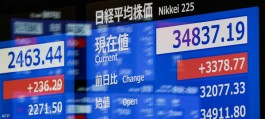
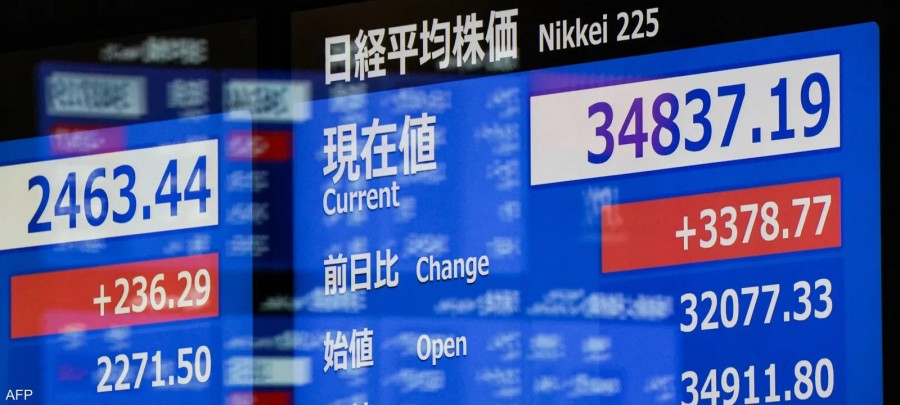
The MSCI Asia Pacific Index rose 0.9%, while Japan's Nikkei 225 average climbed 2.5%, boosted by gains in technology stocks. Shares of Taiwan Semiconductor Manufacturing Co., a key benchmark for the chip sector, jumped 3% amid speculation of a potential collaboration with Elon Musk's Terafab.
Sentiment towards the technology sector remained strong, with Nasdaq 100 futures rising 0.2% after the benchmark index closed at a record high during Friday's session.
Brent crude for December delivery fell 0.7% to around $101.50 a barrel after Saudi Arabia cut its benchmark crude prices for Asia as flows increased. Treasury bonds edged higher across the yield curve, with the benchmark 10-year yield slipping two basis points to 5.25%.
Elsewhere, an exchange-traded fund (ETF) tracking Brazilian stocks in Japan jumped 7.6% after Flavio Bolsonaro unexpectedly came out ahead of President Luiz Inácio Lula da Silva in the first round of the country's presidential election. Real futures also rose.
The decline in oil prices further boosted sentiment after Friday's jobs report showed that U.S. employers added fewer workers than expected, prompting financial markets to price in a less than 25% probability of the Federal Reserve raising interest rates in October.
The period of relief in the bond market came after a months-long sell-off fueled by persistent concerns about inflation, government spending, and a sharp rise in corporate borrowing to finance the expansion into artificial intelligence.
Jobs data eases bets on interest rate hikes
Shane Oliver, chief economist and head of investment strategy at AMP Ltd, wrote in a note that September's jobs data, which came in a perfect-scenario—neither too strong nor too weak—adds to expectations that the Federal Reserve will not rush to raise interest rates again this month.
In other markets, the Bloomberg Dollar Index rose 0.3%, and gold climbed 0.5% to around $4,160 an ounce after ending its biggest weekly loss since June, as rising bond yields outweighed bets that the Federal Reserve would keep interest rates unchanged.
Last week, yields on benchmark 10-year US Treasury bonds hit their highest level since 2002.
Mark Dowding, chief investment officer for fixed income at RBC BlueBay Asset Management, wrote in a note: “The steepening of global bond yield curves has intensified over the past week, and the volatility we are seeing in fixed income yields is finally starting to attract attention in the wider financial markets.”
Contagion fears return to European bond market
Investors are also watching for signs of contagion in the European government bond market after a recent sell-off revived memories of the region's debt crisis 15 years ago. The euro extended its losses to 0.6% against the US dollar.
Fiona Lim, chief foreign exchange strategist at Malayan Banking Bhd, said: “The dollar appears to have weathered the impact of last Friday’s weaker labor market report, with the market’s focus shifting to the Eurozone after French credit default swap spreads widened sharply last week.”
She added: This has drawn attention to the financial resilience of other heavily indebted economies on the periphery of the bloc, providing additional support for the strength of the dollar.