









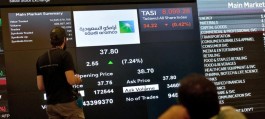




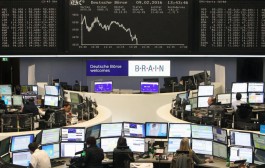















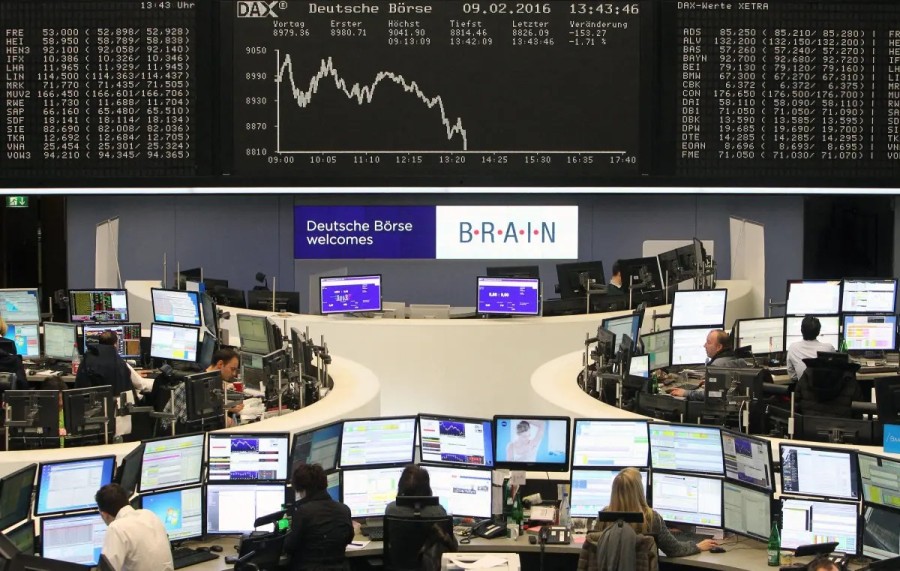


European stocks rose slightly at the start of trading on Thursday, attempting to stabilize after a sharp weekly sell-off, supported by a recovery in global bond markets and dovish comments from a senior Federal Reserve official, which provided temporary relief for battered high-risk assets, according to Investing.
The pan-European STOXX 600 index rose 0.12%, ending a three-session losing streak, after hitting its lowest level in more than a month on Wednesday.
Germany’s DAX index rose 0.2%, while France’s CAC 40 and Britain’s FTSE 100 were virtually unchanged.
This limited rise comes after a turbulent start to September, during which European stock markets were under strong pressure from a sell-off in sovereign debt that pushed global bond yields to multi-year highs, along with rising energy prices linked to military exchanges in the Arabian Gulf, and a sharp repricing of central bank interest rate expectations.
A global sell-off in fixed-income markets has pushed the yield on Germany’s 10-year bonds up to 3.37%, its highest level since 2011, while the yield on the US Treasury’s 10-year bonds has approached 4.80%.
Higher risk-free rates have eroded equity risk premiums, squeezed valuation multiples, particularly for growth and technology stocks, and increased concerns about debt refinancing.
The US and Iranian military strikes in the Strait of Hormuz pushed crude oil prices above $90 a barrel earlier in the week, reigniting concerns about inflation caused by higher production costs and threatening to derail anticipated monetary easing cycles.
This double shock pushed Germany’s DAX and France’s CAC 40 to their lowest levels in several weeks and months, while Britain’s FTSE 100 recorded its biggest single-session drop in nearly two months, before beginning to form an initial stabilization base.
One of the key factors behind the stabilization of markets on Thursday was a shift in tone from central bank officials overnight.
New York Federal Reserve President John Williams tempered market expectations of an immediate interest rate hike at the Federal Open Market Committee meeting in September, saying on Wednesday that policymakers should wait and monitor incoming economic data before deciding on further monetary tightening.
Williams' cautious tone was reinforced by weaker-than-expected US labor market data, with private-sector jobs rising by only 38,000 in August, below market expectations and indicating a slowdown in the labor market.
Weaker-than-expected ADP data triggered a rally in US Treasury bonds and Asian sovereign debt overnight, giving European debt markets a chance to catch their breath as benchmark bond yields retreated from multi-year highs.
Investors are now focusing on comments that Federal Reserve member Christopher Waller is scheduled to make later today, looking for further clues as to whether the general sentiment within the Federal Open Market Committee is leaning toward holding interest rates steady or raising them on September 16.
Commodity markets provided additional support to European industrial sectors on Thursday, with crude oil prices easing slightly, taking a break from the recent rally that had pushed geopolitical tensions above $90 a barrel.
On the macroeconomic front, attention is now turning to the Eurozone Producer Price Index data, due to be released later in the session.
Traders will be scrutinizing inflation indicators at the factory gates to assess whether wholesale price pressures are easing sufficiently to give the European Central Bank more room to maneuver ahead of its monetary policy meeting on September 10.
On the individual stock level, Deutsche Telekom shares rose by 1.4%.