







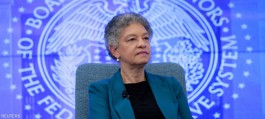

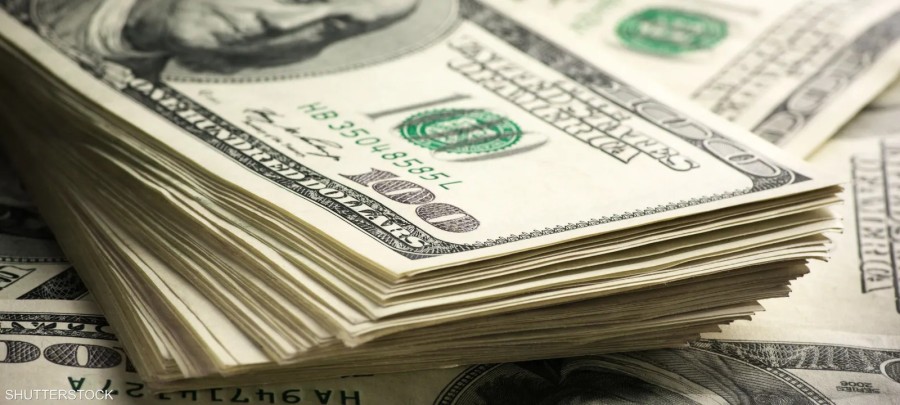
The US dollar rose to a six-week high on Wednesday, as investors became increasingly convinced that interest rates may need to rise to counter inflation resulting from a war with Iran.
Uncertainty over when the conflict will end has fueled inflation fears and triggered a broad sell-off in global bond markets, pushing the yield on 30-year US Treasury bonds to its highest level since 2007.
US President Donald Trump said the United States may have to launch another strike against Iran, but at the same time indicated that Tehran wanted to reach an agreement to end the war that has effectively closed the vital Strait of Hormuz, sending energy prices soaring and triggering turmoil in global markets.
The dollar index, which measures the performance of the US currency against a basket of six major currencies, rose 0.1% to its highest level since April 7 at 99.47. The index gained more than 1.3% during May, supported by demand for safe-haven assets and market pricing in the likelihood of a Federal Reserve interest rate hike before the end of the year.
In contrast, the euro fell to a six-week low of $1.158, down 0.16%, while the pound sterling slipped 0.07% to $1.338, near its six-week low hit earlier in the week.
The Australian dollar, often seen as an indicator of risk appetite in the markets, was nearly unchanged at US$0.711, after having fallen 0.9% on Tuesday.
Data from CME Group’s FedWatch tool showed that traders are now pricing in a greater than 50% probability of the Federal Reserve raising interest rates by December, a sharp shift from pre-war expectations, which pointed to two rate cuts.
Investors are awaiting the release of the minutes from the Federal Reserve's latest meeting later today, looking for further clues about the direction of monetary policy.
Analysts said that rising US bond yields were the primary driver of the dollar's strength.
Derek Halpenny, senior currency analyst at MUFG, said: “There is room for further upside in yields.”
He added: “Although we still believe the Fed will raise interest rates at a slower pace than many other central banks in the G10, market pricing remains relatively low at this stage, especially with the increasing risk of a further jump in crude oil prices.”
Brent crude futures fell 1.1% to around $110 a barrel, but are still more than 50% higher than levels seen in late February before the outbreak of war.
Renewed concerns about the Japanese yen
The rise of the dollar has pushed the Japanese yen back towards the 160 yen-to-the-dollar level, a level that prompted Japanese authorities last month to intervene in the currency market for the first time in nearly two years.
Tokyo had intervened several times in late April and early May to curb the yen's decline, according to Reuters sources, but the effect of those interventions did not last long.
The yen was steady in recent trading at 159.01 yen to the dollar, as investors digested comments from U.S. Treasury Secretary Scott Bisent.
Bisent told Reuters on Tuesday that he was confident Bank of Japan Governor Kazuo Ueda would “do what is necessary” if given sufficient independence from the Japanese government, referring to Washington’s desire to see further interest rate hikes by the Japanese central bank.
Christopher Wong, currency strategist at OCBC Bank, said: “In the near term, excessive volatility remains the key factor, while the 160-161 level remains the line that markets are watching.”
He added: “The risks of intervention may make markets more cautious about continuing to buy the dollar against the yen, but unless US bond yields and the dollar generally decline, any official move may only temporarily slow the rise, and is unlikely to reverse the trend entirely.”
UAE's Mubadala leads a $400 million financing round for German insurance company Wefox
Wefox, an insurance technology company founded by former emp.. Read more

Saudi Arabian Centers distributes dividends to shareholders for the second half of 2022 with a total of 356.25 million riyals
Arabian Centers Company has approved the distribution of cas.. Read more

The largest sovereign funds: "Abu Dhabi Investment Authority" advances to third place globally, with assets of $708.8 billion
The Abu Dhabi Investment Authority has advanced to the third.. Read more
Accumulated losses place Emirati companies on the "second category" screen, pending anonymity
Special Report - (Namazone): A group of companies listed.. Read more

Details 142 Saudi initiative to face the consequences of "Corona" B214 billion riyals
Special Report (Nmazzon): The government announced that.. Read more

Will gold remain a safe haven asset?
Gold has long been a source of controversy and contention am.. Read more
Global trade is expected to decline in the coming months
The economics department of Qatar National Bank (QNB) said t.. Read more

Analysis .. How will major central banks respond to the increasing cases of financial instability?
The global macroeconomic environment is experiencing some of.. Read more
The euro is below the dollar .. the lowest level in 20 years
For the first time in 20 years, the euro fell below $1 on Tu.. Read more
"OPEC"...The pressures of supply shortage will continue next year
OPEC expected global demand for oil to increase next year, b.. Read more
The dollar hits a six-week high as bets on an interest rate hike mount.

NamaaZone " The Power of Knowledge"


Analysis Service |
Its a free service for technical consultation provided by NamaaZone to the website visitors. |
Open account Request |
NamaaZone provides a range of integrated trading solutions in local and global financial markets |