


























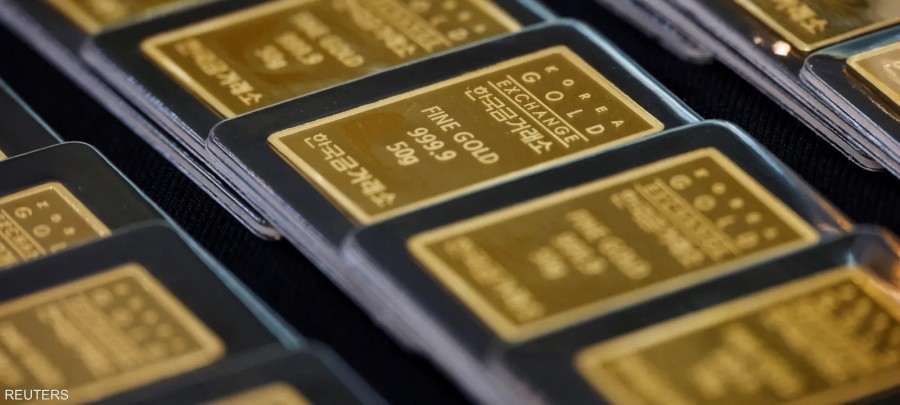


Gold continued its decline during trading on Monday, hitting its lowest level in nearly two weeks, after comments by US Federal Reserve Chairman Kevin Warsh raised growing expectations of a possible further interest rate hike in an attempt to control high inflation.
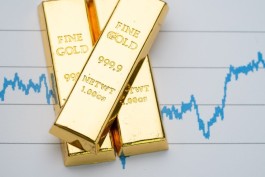
Spot gold fell 0.7% to $4,423.84 an ounce, after hitting its lowest level since August 19. The precious metal had recorded losses of more than 3% during trading on Friday.
US gold futures for December delivery also fell 1.3% to $4,472.90 an ounce, as markets continued to reassess the direction of US monetary policy following a more hawkish tone and workshops.
Statements and workshops reshape interest rate expectations
Tim Waterer, senior market analyst at KCM Trade, said gold is still trying to recover from the effects of the hawkish tone taken by Warsh during the Jackson Hole Economic Symposium.
Waterer explained that markets are still absorbing the shift in interest rate expectations, noting that the main question now is whether statements and workshops on combating inflation will actually translate into a decision to raise interest rates during the next September meeting.
Warsh had said on Friday during the Jackson Hole Economic Symposium in Wyoming that the Federal Reserve would have a lot of work to do if policymakers did not gain enough confidence that inflation was indeed heading toward the central bank's 2% target.
These remarks represent the closest Wollsch has yet to acknowledge that raising interest rates may be necessary to contain price pressures, prompting markets to reprice the central bank's next decision.
According to the US interest rate monitoring tool available on Investing Saudi, markets are currently pricing in a 57% probability of a US interest rate hike during the September meeting, compared to about 36% before the statements and workshops.
High interest rates are putting pressure on the appeal of gold.
Although gold is commonly seen as a hedge against inflation, rising interest rates put pressure on the precious metal because it does not generate returns or interest for its holders, making yield-bearing assets more attractive in a tight monetary environment.
This week, attention is focused on a series of data releases related to the US labor market, which could directly influence interest rate expectations and the trajectory of gold in the coming period.
The data to be released includes job openings, the ADP employment report, weekly unemployment claims, and non-farm payrolls data, which are among the most important indicators monitored by the Federal Reserve when assessing the strength of the labor market.
Waterer said that non-farm payrolls data could play a crucial role in determining the direction of gold, as it could lead to continued weakness in the metal after the Jackson Hole symposium, or conversely provide a catalyst for a short-term rebound as investors close short positions.
Geopolitical tensions are driving metals and energy markets.
On the geopolitical front, a U.S. official said that U.S. forces targeted two missile launch sites on Iran’s Larak Island on Sunday, in the first known U.S. strikes against Iran since late July.
The announcement of the strikes led to a rise in oil prices, amid renewed concerns about the repercussions of military escalation on energy supplies and global markets.
In other metals markets, spot silver fell 0.5% to $66.01 an ounce, while platinum dropped 0.5% to $1,810.64 an ounce.
Palladium also fell 1.7% to $1,397.11 an ounce, as the precious metals sector continued its mixed movements amid changing investor expectations regarding US interest rates, the strength of the dollar, and geopolitical tensions.