
















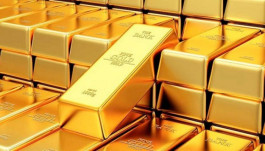

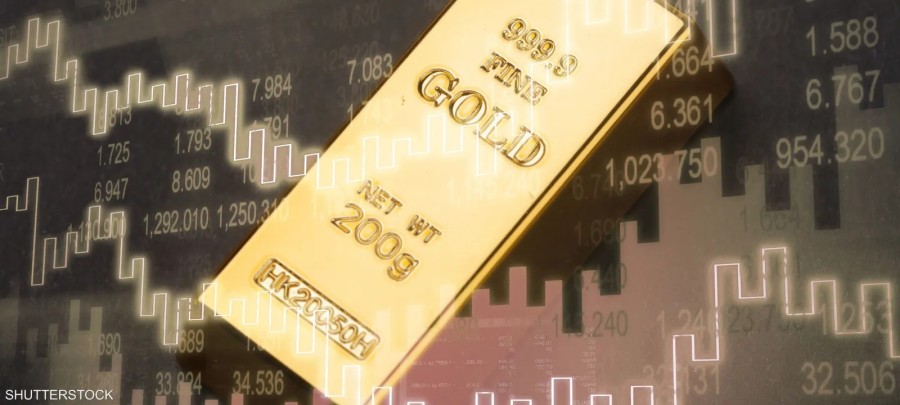


Gold prices declined during trading on Tuesday, as investors assessed developments in Middle East tensions, while awaiting a series of US labor market data releases scheduled for this week, which could significantly influence the Federal Reserve's monetary policy outlook.
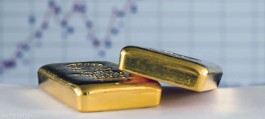
Spot gold fell 0.4% to around $4,428.54 an ounce, after hitting its lowest level since August 19 in the previous session.
US gold futures for December delivery also fell by 0.1% to around $4,477.20 an ounce.
Investors this week are focused on a range of US economic data, including job openings, the ADP employment report, and non-farm payrolls data, looking for clues about the strength of the labor market and the likely path of interest rates.
Warsh puts pressure on gold after a hardline tone
Gold had hit its highest level in more than three months last week before suffering a sharp 3% drop on Friday, after Federal Reserve Chairman Kevin Warsh said the central bank would have “work to do” if policymakers did not gain the necessary confidence that inflation was heading toward the bank’s 2% target.
Tony Sycamore, a market analyst at IG, said gold was under pressure from the hawkish tone adopted by Warsh in his speech at the Jackson Hole symposium, along with renewed tensions in the Strait of Hormuz, accompanied by rising oil prices and increased inflation expectations.
He added that raising interest rates once would not necessarily be a decisive factor in changing the direction of gold, but repeating interest rate hikes two or three times could have a greater impact on the precious metal.
CME Group’s Fidwatch tool indicates that traders currently see a probability of about 66% for a US interest rate hike in September, while the probability of a hike in December is around 89%.
Inflation and interest rates determine the direction of the precious metal.
Although gold is generally seen as a hedge against inflation, rising interest rates tend to put pressure on the precious metal, since higher interest rates increase the appeal of assets that provide a return for investors.
Meanwhile, U.S. President Donald Trump told reporters in the Oval Office that he had great respect for Warsh, adding that the Federal Reserve chairman “will do what he has to do” with regard to interest rates.
On the geopolitical front, Trump threatened on Monday to carry out more strikes against Iran, following the first direct exchange of attacks between the two sides in a month, escalating tensions in a conflict that had recently turned into an economic confrontation.
These developments coincided with a rise in oil prices for the second consecutive session, which increases concerns about inflationary pressures and reinforces the sensitivity of metal markets to the path of US interest rates.
Silver and platinum move in opposite directions.
As for other precious metals, the spot price of silver fell by 0.2% to about $66.42 an ounce.
In contrast, platinum rose 0.4% to around $1,797.71 an ounce, while palladium held steady at around $1,355.08 an ounce.