































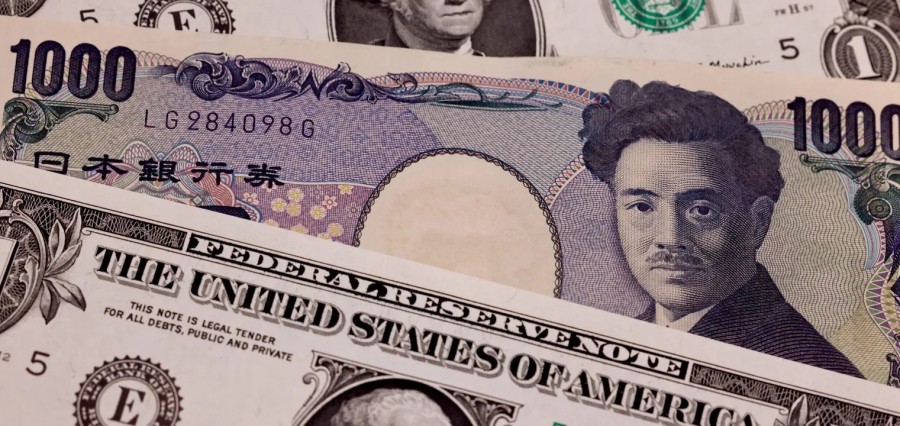


The Japanese yen declined in Asian markets on Tuesday against a basket of major and minor currencies, continuing its losses for the seventh consecutive day against the US dollar, nearing its lowest level in three weeks, amid investors' assessment of developments in the Iranian war, especially Trump's postponement of a military strike on Iran following mediation by leaders of major Gulf states.
Government data released today in Tokyo showed that the Japanese economy grew better than expected in the first quarter of this year, which strengthens the likelihood that the Bank of Japan will raise interest rates when it meets next June.
Price overview
Today's Japanese Yen exchange rate: The dollar rose against the yen by 0.15% to (159.03¥), from today's opening price of (158.79¥), and recorded a low level at (158.71¥).
The yen ended Monday's trading down less than 0.1% against the dollar, its sixth consecutive daily loss, hitting a three-week low of 159.08 yen, due to renewed Iranian war fears.
US dollar
The dollar index rose 0.15% on Tuesday, resuming gains that had paused the previous day, and moving closer to a six-week high, reflecting a renewed rise in the US currency against a basket of global currencies.
This rise is driven by safe-haven currency purchases, as market sentiment remains fragile, despite US President Donald Trump's decision to postpone a military strike against Iran following Gulf mediation, pending tangible progress in Pakistani-sponsored peace talks.
Developments in the Iranian war
Trump explained via Truth Social that he agreed to postpone the planned attack on Iran on Tuesday after intensive contacts with Gulf leaders to give Pakistani mediation an additional grace period.
Trump directed the Department of Defense (the Pentagon) to remain fully prepared to move forward and take military action from all directions in the event that negotiations fail.
The White House insists that any final agreement must include a strict and key condition: the complete and absolute prohibition of Iran possessing a nuclear weapon.
Tehran has officially submitted, through Pakistani mediation, an updated 14-point response to the US administration. Iran is demanding a long-term ceasefire, international guarantees, and the lifting of the naval blockade.
US officials stated that the new Iranian proposal was insufficient and did not include any substantial improvement, but Trump later described the ongoing negotiations as having made very positive progress after the postponement decision.
The United States is demanding a twenty-year freeze on Iran's nuclear program, and Tehran is refusing.
New warnings
Japan’s Finance Minister, Satsuki Katayama, told reporters on Monday that Japan is ready to act to counter excessive volatility in the foreign exchange market at any time, while ensuring that any intervention to support the yen and sell dollars is done in a way that does not raise U.S. Treasury yields.
Japanese economy
Data released today in Tokyo showed that the Japanese economy grew at an annual rate of 2.3% in the first quarter of this year, exceeding market expectations of 1.7% growth. The world's fourth-largest economy recorded growth of 1.3% in the fourth quarter of last year.
Japanese interest rate
Following the above data, the pricing of the probability of the Bank of Japan raising interest rates by a quarter of a percentage point at its next June meeting rose from 80% to 85%.
In order to reprice those probabilities, investors are awaiting further data on inflation, unemployment and wage levels in Japan.