












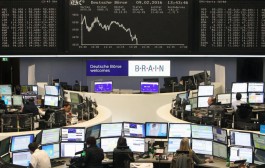














Stocks continued to be pressured, and there were few signs of the bond sell-off abating, as the continued rise in oil prices reinforced expectations that monetary policymakers around the world would be forced to raise interest rates.
Brent crude rose for a third day, nearing $95 a barrel, after briefly hitting its highest level in two weeks following a sharp escalation in the conflict between the United States and Iran.
Bond prices fell in Europe and Asia, while the yield on the benchmark 30-year US Treasury note hovered around 5.28%, near its highest level in 19 years, which it reached before US Treasury Secretary Scott Bisnett expanded the bond-buying program to curb long-term borrowing costs. The yield on the benchmark 10-year note held steady at 4.80%.
S&P 500 futures stabilized after three consecutive sessions of losses. Nasdaq 100 futures fell 0.1%.
The pan-European STOXX 600 index fell 0.2%, and the MSCI Asia Pacific index dropped 1.8%, its biggest decline in two weeks.
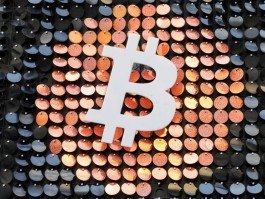
The US dollar was little changed, gold was steady, while Bitcoin rose 0.2% to $77,601.
Rising oil prices fuel inflation fears
The latest surge in energy prices is exacerbating fears of continued inflation, which has led to a rise in the premium traders are demanding to hold bonds, which are already under pressure from massive government spending and strong corporate demand for financing.
Traders expect a greater than 50% probability that three major central banks will raise interest rates this month, including a 70% probability that the Federal Reserve will take the step.
Investors are assessing whether rising oil prices and bond yields will deepen the pressure on stocks and other assets.
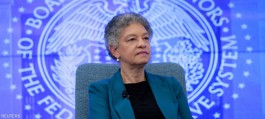
Chris Turner, global head of markets at ING Groep, wrote: “The new baseline expectation appears to be that the Fed will eventually raise interest rates in September.” He added: “Federal Reserve Chair Kevin Warsh has made it reasonably clear that inflation is not falling fast enough to the target level, and the Fed will have to act while the economy remains reasonably strong,” according to Bloomberg.
Higher yields are putting pressure on gold and technology stocks.
Patrick Lang, chief investment strategist at Global Gate Asset Management, told Bloomberg that while equity markets remain relatively calm, that is likely to change once U.S. Treasury and Japanese bond yields break above current resistance levels.
He added: I don't expect a correction, but we are likely to see consolidation, given that stock markets are still near record levels, which will put pressure on policymakers to intervene continuously.
Mark Cranfield, a strategist with Bloomberg Markets Live, said: Now that U.S. bonds have returned to levels not seen since October 2023, investors will also remember that yields peaked near 5.02% during that yield surge.
He added: Fixed-income traders will expect targeted purchases of Treasury bonds in that area if 5% is reached again.
Technology remained in focus, with reports that Nvidia was in advanced talks to acquire AI startup Hugging Face in a $14 billion deal.
Tim Waterer, senior market analyst at KCM Trade, wrote in a note: “The rise in global bond yields has emerged as the dominant story in financial markets this week,” according to Bloomberg.
He added: “High global yields do not bode well for economic growth or corporate profits, making it difficult to imagine a scenario in which risky assets can rise comfortably in conjunction with bond yields spiraling upwards.”
Renewed Iranian strikes bolster bets on an interest rate hike
Meanwhile, the US military said it had completed its strikes, even as Iran announced it had launched a missile attack on a US airbase in Jordan. The exchange of attacks followed weeks of relative calm, during which the Trump administration had shifted from military action to economic pressure on Tehran.
Renewed tensions add to the challenges facing Wall Street as the global bond sell-off deepens. Warsh's speech at Jackson Hole last week also fueled expectations of tighter monetary policy, with markets pricing in a roughly 70% probability of an interest rate hike in September.
Swaps contracts are almost fully pricing in a September 10 European Central Bank interest rate hike and a 58% probability of a September 29 Reserve Bank of Australia rate increase. Markets are also fully pricing in a September 18 Bank of Japan move.