













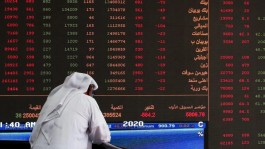







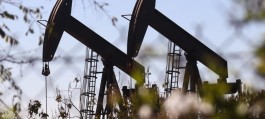














Oil prices continued their upward trend during trading on Wednesday, driven by growing concerns about the widening scope of the military confrontation between the United States and Iran and its potential impact on crude oil supplies coming from the Middle East, with Brent crude exceeding $95 a barrel.
The new gains came after a strong session yesterday, during which the two benchmark crudes added more than $4 a barrel, as tensions escalated following a series of US airstrikes on targets inside Iran, before Tehran responded with missile and drone attacks targeting US bases in the region.
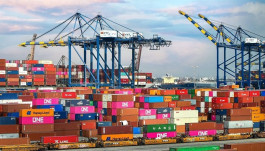
Concerns about shipping increased after the Iranian Revolutionary Guard announced that continued confrontations would lead to stricter restrictions on navigation through the Strait of Hormuz, bringing back to the markets the scenario of disruption to oil tanker traffic through one of the world's most important maritime energy routes.
These developments have reinforced the geopolitical risk premium in crude prices, as traders monitor any signs of reduced shipping activity or actual supply disruptions, especially with the continued military escalation and no clear signs of an imminent de-escalation.
By morning trading, Brent crude futures for November delivery had risen 0.75%, or 69 cents, to $95.34 a barrel, while US Nymex crude for October delivery had climbed 0.40%, or 34 cents, to $90.56 a barrel.
Meanwhile, prices received additional support from American Petroleum Institute data showing a decline in US crude inventories, reinforcing expectations of continued strong demand or tighter supply in the US market.
Markets are awaiting the release of official oil inventory data from the U.S. Energy Information Administration later today, with expectations of a slight decline in stockpiles. These figures may take on greater significance than usual given the current geopolitical climate, as a larger-than-expected drop could provide a further boost to crude prices, while a rise in inventories could limit the upward trend.