















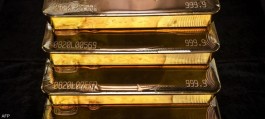














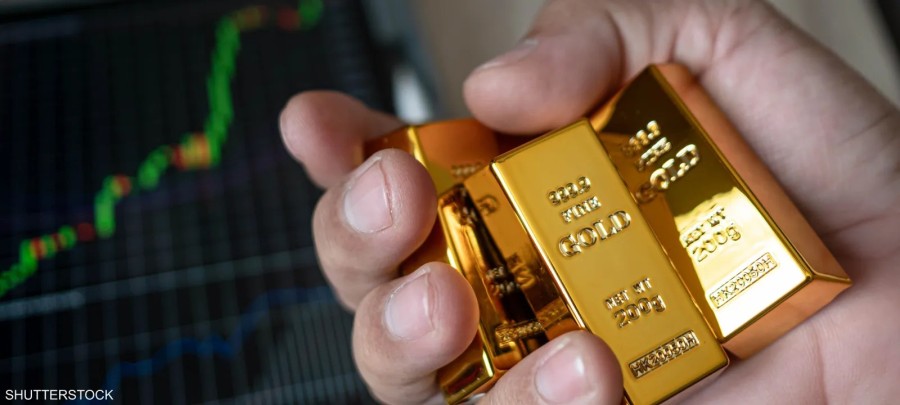


The price of gold in spot trading is currently at $4,263 per ounce at 12:23 PM Saudi time, while US gold futures have fallen by 1% to $4,304. Later today, Federal Reserve Chairman Kevin Warsh will announce the monetary policy decision, with market bets pointing to a 25-basis-point increase in the benchmark interest rate to a range of 3.75%-4.00%.
But the decision itself, according to Tony Sycamore, a market analyst at IG, may not be the most important factor. How Warch frames this increase—whether he presents it as the start of a sustained monetary tightening cycle or as a more cautious, gradual step—will determine the fate of gold and the direction of risk assets in general in the hours following the announcement.
Triple Pressure Anatomy: How is gold strangled from three sides at once?
The first pressure: Treasury yields at a historic threshold. The yield on the benchmark 10-year US Treasury note rose to 5% on Monday for the first time since October 2023, then continued its climb on Tuesday to reach a session high of 5.030% — the highest level for these yields since early 2007. Breaking this psychological barrier raises the opportunity cost of holding a metal that does not offer a periodic return to its highest levels, as the investor finds himself facing a direct choice: a safe asset that yields more than 5% annually, or a yellow metal that offers nothing but hedging.
The second pressure: The dollar index is in a strong position. The dollar index (DXY) is trading above 99 points, up nearly 0.3% on the day, supported by expectations of an interest rate hike and safe-haven flows into the dollar itself. Since gold futures are priced in dollars, any strength in the US currency makes buying an ounce more expensive for holders of other currencies, directly putting pressure on global demand for the metal.
The third pressure: Inflation data that doesn't give the Fed a reason to slow down. Data released on Friday showed that US consumer prices accelerated in August, while one measure of core inflation recorded its largest increase in four months. This acceleration reinforces the assumption that the central bank will continue its tightening path, which keeps gold under pressure from a third angle, independent of yields and the dollar.
Adding to this mix is a geopolitical dimension: the Iranian-backed Houthis have launched a new wave of attacks on Saudi Arabia, pushing Brent crude prices up to around $108 — a development that could later affect inflation expectations themselves if pressure on energy supplies continues, adding another factor to an already complex equation.
The third pressure: Inflation data that doesn't give the Fed a reason to slow down. Data released on Friday showed that US consumer prices accelerated in August, while one measure of core inflation recorded its largest increase in four months. This acceleration reinforces the assumption that the central bank will continue its tightening path, which keeps gold under pressure from a third angle, independent of yields and the dollar.
Adding to this mix is a geopolitical dimension: the Iranian-backed Houthis have launched a new wave of attacks on Saudi Arabia, pushing Brent crude prices up to around $108 — a development that could later affect inflation expectations themselves if pressure on energy supplies continues, adding another factor to an already complex equation.